TL;DR
- Plan timelines backward around a 3:30-4:00 PM sunset, and strongly encourage a first look or an earlier ceremony to maximize daylight.
- If outdoor shots happen post-sunset, leverage blue hour light and adjust your white balance during post-processing for moody, rich tones.
- Identify venue spots near big windows, textured walls, or covered outdoor spaces to keep portraits moving smoothly out of the cold.
- Cold temperatures drain batteries fast; keep spares warm in pockets, use lens hoods to protect glass from snow, and carry a microfiber towel.
- Avoid taking warm cameras directly into cold air (and vice versa) to prevent condensation. Let gear acclimatize or send a second shooter out early.
- Wear specialized photography gloves with finger flaps so you can adjust camera settings without exposing your hands completely.
As someone who photographs year-round and lives in the Northeast, I’ve learned there are a few certainties that come with being a wedding photographer.
In summer, you’re preparing for cameras that might overheat. Then fall rolls around, everyone suddenly wants their engagement photos taken, and your calendar fills up so fast you barely have time to breathe.
And then comes the dreaded winter wedding.
You get the booking and, at first, you’re thrilled. A winter wedding means extra income during what’s usually the slowest part of the year. But then reality sets in: are you actually prepared to shoot a wedding in some pretty unforgiving conditions?
Winter weddings can be absolutely beautiful. Snowy portraits, crisp light, cozy venues, the whole thing can look incredible on camera. But they can also make your job significantly harder if you walk in with the same approach you’d use for a summer wedding. Cold batteries, fogged-up lenses, freezing fingers, unpredictable weather, winter has a few surprises of its own.
So, with the colder months approaching, here are some practical pointers for handling winter weddings and sessions, and making the most of a frozen Northeast celebration (or really, a cold-weather shoot anywhere).
The Biggest Winter Wedding Photography Problem: Racing the Sunset
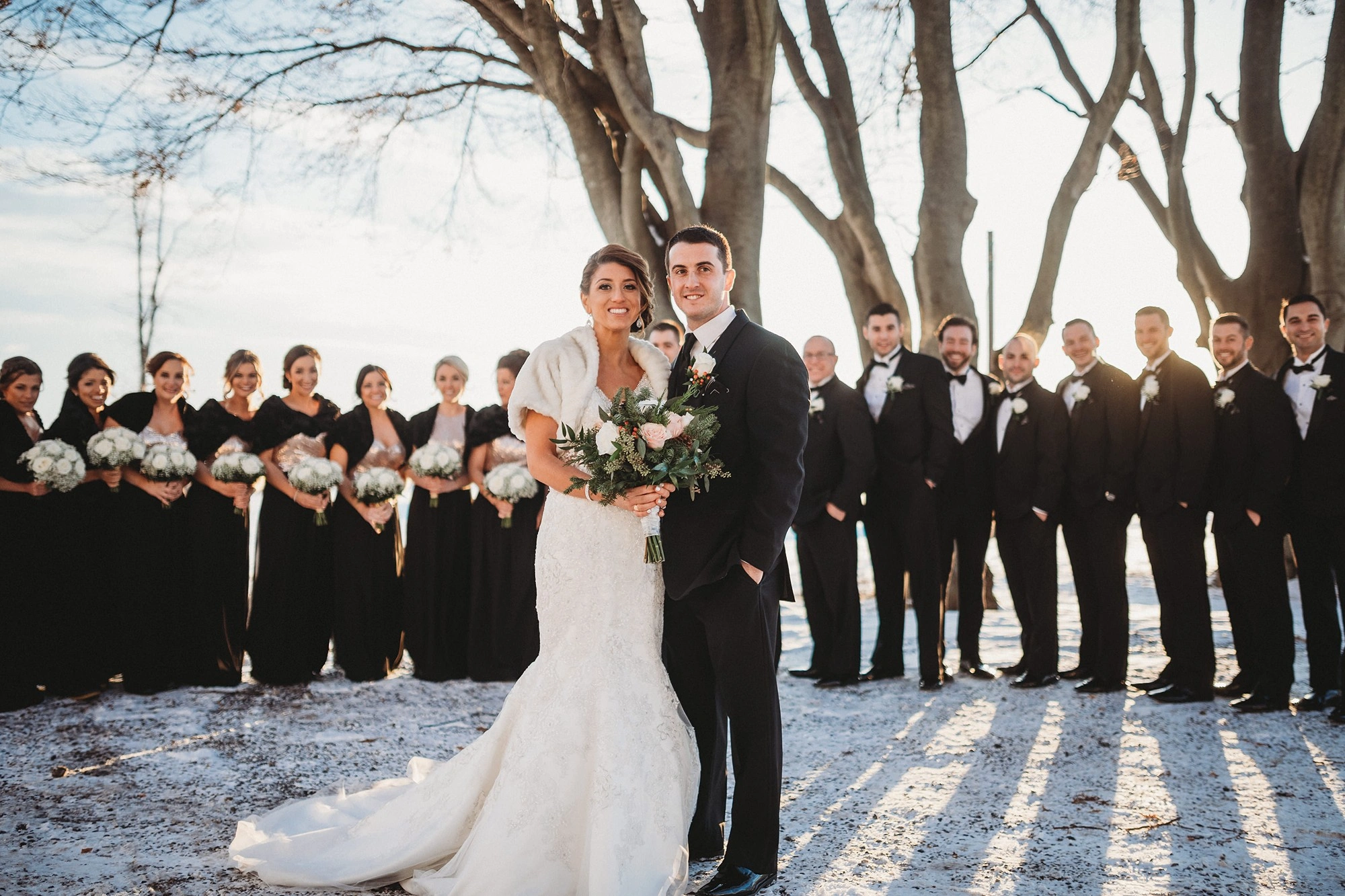
One of the biggest challenges I run into during winter weddings is the constant race against the clock. In my area, the sun can set as early as 3:30-4pm. That makes for a tight timeline and calls for some clear, transparent communication with your clients.
So what does that communication look like? For me, it starts with checking sunset time before I even help my couples build their timeline. I work backward from sunset rather than following the venue’s schedule.
- First look
Winter weddings are exactly the kind of day where I encourage couples to do a first look, so we can knock out portraits and family photos before the sun sets. That said, it’s important not to push or pressure them into it, it’s their day. If they’re adamant about skipping the first look, the most important thing you can do is set expectations. Here’s generally what I tell couples in that situation:
“That’s perfectly fine, it’s your day! Just know that a ceremony around 3–4pm generally means family, wedding party, and couple portraits will be done in the dark. As long as you’re okay with that, there’s no need for a first look.”
- Blue hour vs. golden hour
If they still want to skip the first look, encourage an earlier ceremony so you at least have time to shoot during blue hour, the hour after the sun sets. Golden hour gets all the attention, but don’t discount blue hour. Your images will look a bit blue, and you may need a slight white balance adjustment in post to get the most out of those tones.
- Scouting for light
Winter weddings can have beautiful light, but that doesn’t mean you’re guaranteed to get it. When I walk into a venue and realize we’re probably not going to be outside much, I scout for a few specific things:
- Big windows
- Walls with interesting texture or color that might work with the couple
- Covered outdoor areas
- Locations close to a door (more on that below)
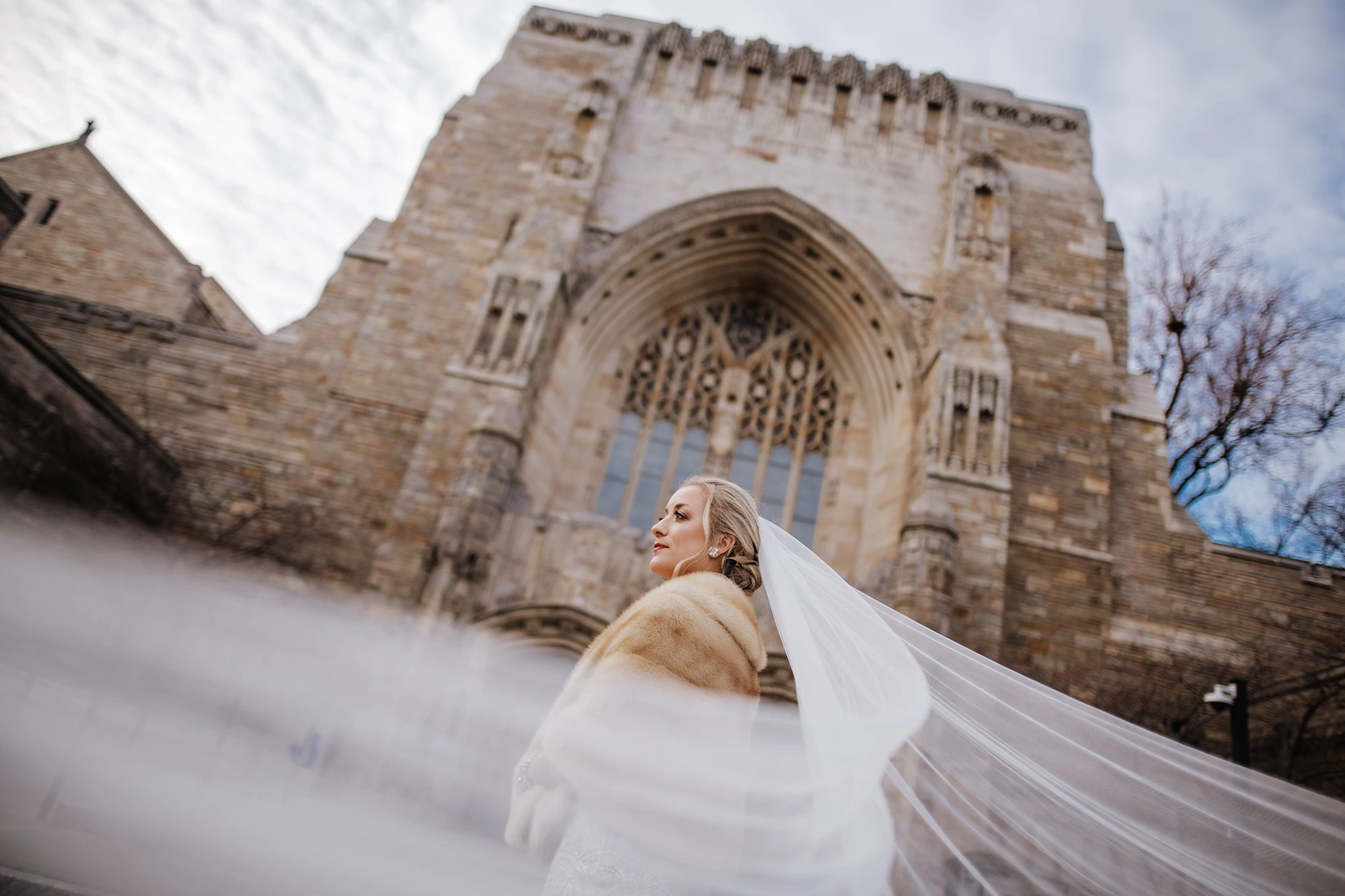
Having a plan for where you’ll shoot goes a long way toward having a smooth day. Without one, you’re left wondering what to do next in front of your couple during portraits, which makes for some awkward silence.
Gear Strategy for Winter Weddings
Here are some tips I’ve learnt over the years:
- Protect your gear
Whatever you do, don’t leave your gear out in the cold, especially your batteries. Over the years, I’ve learned the hard way just how much cold weather affects cameras and batteries alike. Keep extras handy in case they drain faster than expected.
If it’s snowing, cover your equipment or, at minimum, use a lens hood so snow doesn’t hit the front element and ruin your shots. Keep a microfiber towel in your pocket at all times in case you need to wipe down your gear.
- Photography gloves
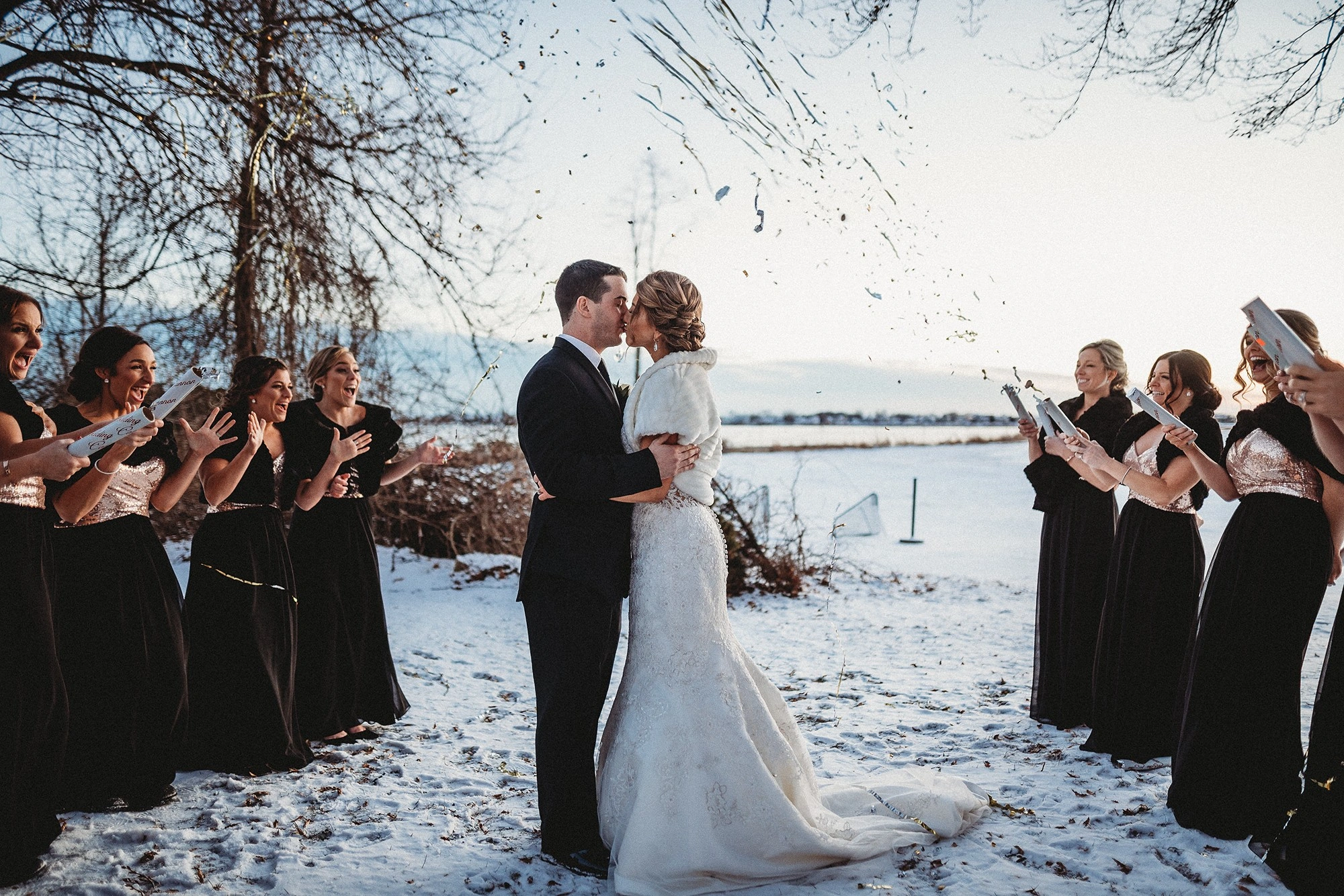
These are game-changers for shooting outside in winter. Don’t grab cheap gloves from the pharmacy, they’ll just make handling your camera clunkier. Go to your local camera store and get a proper pair of photography gloves. Most have fingertip flaps so you can expose your fingers when you need finer control, and they’re well worth the premium.
- Keep a check on moisture
Last but not least, one of my biggest enemies on wedding days: moisture. If you’ve ever shot a wedding, you know exactly what I mean. You’re photographing inside, and your couple says, “Let’s go outside for a few minutes, it looks like it’s clearing up!” The second you step outside, Mother Nature reminds you what a sudden temperature swing does to glass. Spoiler: it’s not fun.
So if you know you’ll be heading outside, either keep a backup camera in a cooler room or give your gear time to acclimatize before you need it. If you’re working with a second shooter or associate, send them out ahead of you and your couple. By the time you step outside, their cameras will already be acclimated and ready to go.
Winter sessions can be some of the most beautiful, and most challenging, things you’ll do as a photographer. Since Mother Nature isn’t something you can control, the best you can do is prepare for these situations. As a business owner your clients are depending on, that’s part of the job.
Anything you’d add to this list? Let us know!
FAQs for Winter Wedding Photography
Q1. How do you handle early sunsets during winter weddings?
Work backward from the sunset time (often around 3:30–4:00 PM) when building the timeline. Encourage couples to do a first look or schedule their ceremony earlier in the afternoon so key portraits can be taken in natural daylight.
Q2. How do you prevent camera lenses from fogging up in cold weather?
Lens fogging occurs when camera glass experiences rapid temperature swings. To prevent condensation, let your gear acclimatize in a cooler area before stepping outside, or have a second shooter take their gear out ahead of time so it’s ready.
Q3. How does cold weather affect camera batteries, and how can I prepare?
Extreme cold drains lithium-ion camera batteries significantly faster than normal. Pack extra batteries and store them in an inside coat pocket close to your body heat until you need to use them.
Q4. What should photographers wear to shoot winter weddings comfortably?
Layering is key, but dedicated photography gloves are essential. Unlike standard winter gloves, photography gloves feature flip-back fingertips that allow you to adjust dial settings and touchscreens without freezing your hands.
Q5. What are the best indoor backup locations for winter wedding portraits?
Scout the venue for spots with large natural light windows, interesting textured or colorful interior walls, or covered outdoor porches that offer wind and snow protection while still utilizing ambient outdoor light.