TL;DR: Pixieset works, but photographers switch when they need deeper CRM tools, AI-assisted client features, or an editing-to-delivery workflow without manual exports. Aftershoot Galleries is the top alternative, offering AI-powered face search and gating, a built-in print store, and 100 GB free storage during its current preview. Pic-Time wins on gallery design, ShootProof on print sales, Cloudspot on built-in CRM, and SmugMug on unlimited flat-rate storage.
If you’ve been in the photography game for a while, you probably started with Pixieset. It does the basics beautifully – clean galleries, simple proofing, and straightforward print sales. But as your business scales, you might notice the cracks.
The CRM and storefront tools can feel tacked on rather than purposefully built for a busy photographer’s reality. Worst of all, the pricing tiers creep up fast as your storage needs grow. You need more than just a pretty link to send clients. You need smart automation, AI-assisted tools, and a workflow that doesn’t force you to bounce between your editing software and your delivery platform.
If you’re evaluating alternatives and looking for best client galleries, here is what is actually worth your time.
5 Pixieset Alternatives Worth a Look
1. Aftershoot Galleries: Built for the Full Workflow, Not Just Delivery
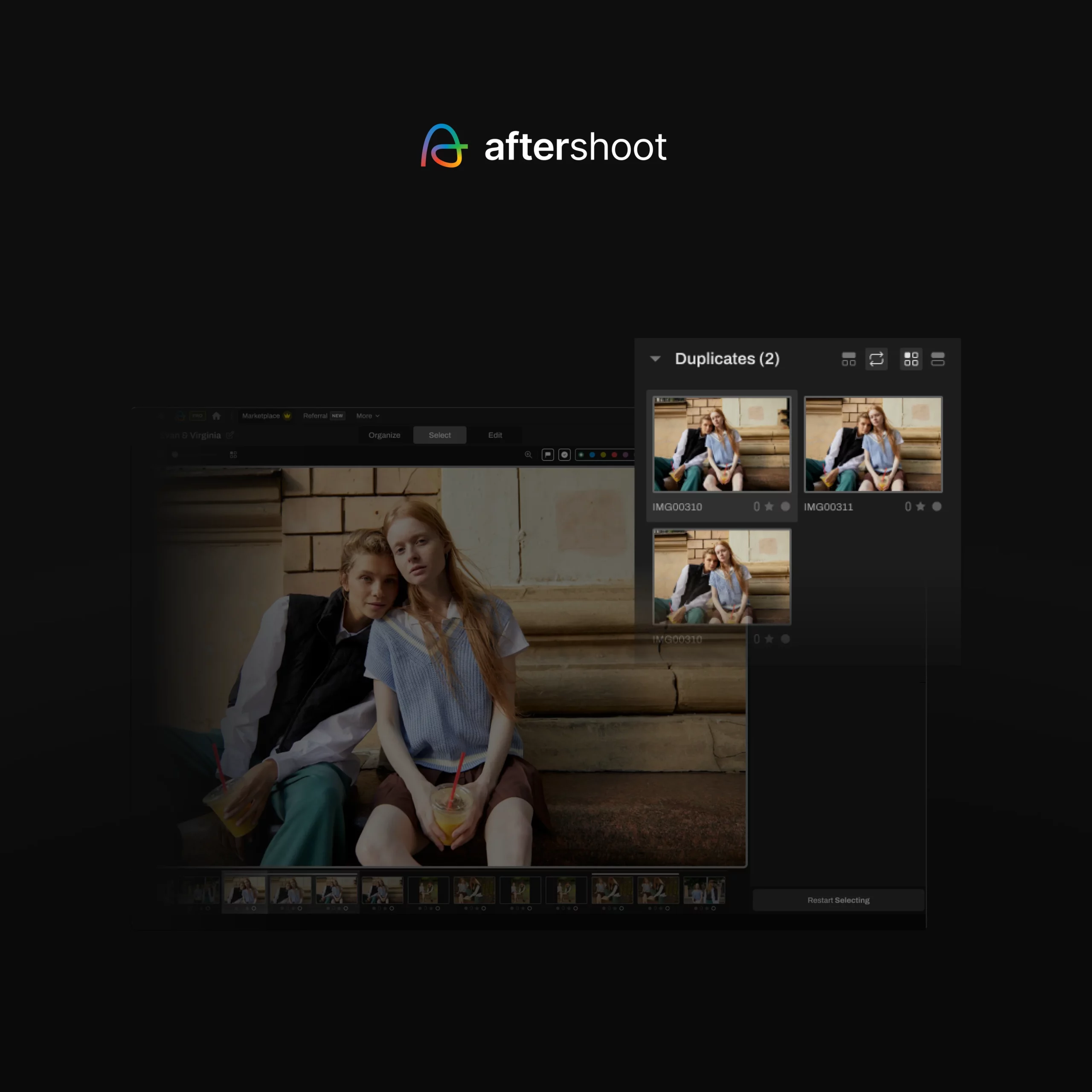
Here’s the thing most gallery platforms get wrong: they treat delivery as a separate step from editing. Aftershoot Galleries doesn’t. The moment you finish editing in Aftershoot, your images go straight into the gallery. No exporting, no re-uploading, no jumping between five different tabs. And if you’re not using Aftershoot to edit, that’s fine too, Galleries works as a fully standalone platform.
What actually makes it stand out:
- Face Scan and keyword search let clients find their own photos instantly, even in a 2,000-image wedding gallery.
- Face Gating lets clients (or their guests) take a selfie and see only their photos – less awkward scrolling, less “can you send me just mine?” texts.
- Built-in print store with WHCC, Bay Photo, and Atkins Pro Labs integrations, plus self-fulfillment, packages, and coupons if you’d rather run print sales your own way.
- Detailed analytics show you who’s viewed, downloaded, or favorited what, so you know exactly when to follow up with an upsell.
- Custom branding (logo, watermark, password protection) so every gallery looks like your studio, not a template.
- Free migration support if you’re switching over from Pixieset, Pic-Time, or ShootProof, you don’t have to rebuild everything from scratch.
- Right now, every photographer gets 100 GB free storage as the Aftershoot Galleries launch offer.
If you’re already editing in Aftershoot, this is the missing piece – you finish culling, editing, retouching – and delivery just happens. No extra steps, no extra tools.
2. Pic-Time
Pic-Time has been around since 2010, and it shows. The platform is built specifically for professional photographers who want galleries that feel less like software and more like an extension of their brand. Pricing starts at $8/month for a Beginner plan with 20GB of storage, scaling up to $25/month for the Professional tier with 100GB, and a top plan around $50/month.
Where it really pulls ahead is the recent Pic-Time 2.0 overhaul, which added an AI-driven album designer, deeper typography and layout controls, and a mobile-first rebuild across galleries, shopping tools, and album workflows.
The tradeoff is that Pic-Time is purely a gallery-and-storefront tool – it doesn’t touch your editing workflow at all, so you’re still exporting from Lightroom or Aftershoot and uploading separately. It also charges a commission (typically 15% on lower tiers) on print and product sales, which decreases as you move up plans but never fully disappears unless you’re on a higher tier. Still, if your priority is the most premium-looking, most customizable standalone gallery on the market, Pic-Time is hard to beat on presentation alone.
Discover How Aftershoot Galleries Stands Out Against Pic-Time: Aftershoot vs PicTime
3. ShootProof
ShootProof has built its reputation over more than a decade as one of the most established gallery-plus-storefront platforms for photographers who treat print sales as a real revenue stream, not an afterthought. It lets you create multiple custom price sheets, run promo codes and limited-time sales, and set your own markups. Plans are positioned around “less than $1/day,” with a 14-day free trial and no credit card required to get started.
What makes ShootProof particularly appealing to wedding and event photographers is how deep its lab integrations run – proofing, delivery, and fulfillment are all connected, so there’s minimal manual coordination once a gallery goes live. That said, like Pic-Time, it’s a delivery-and-sales tool only; there’s no native editing integration, so you’ll still need to export finished images from wherever you edit before uploading. For photographers whose business model leans heavily on album and print sales rather than digital-only delivery, ShootProof’s maturity and lab network make it one of the safer bets on this list.
Find How Aftershoot Galleries is the Better Client Galleries Solution Against ShootProof: Aftershoot vs ShootProof
4. Cloudspot
Cloudspot has positioned itself as the platform that bundles a real CRM into your gallery tool without charging Honeybook-style prices for it – every paid plan includes contracts, invoicing, and lead management alongside galleries. Pricing starts as low as $3 for the first month on promotional offers, with the free plan capped at 5GB storage and just three client galleries before you need to upgrade.
The catch is that Cloudspot’s free tier is genuinely limited: clients can’t download high-resolution images, and you’re capped at three CRM projects until you pay. But once you’re on a paid plan, it becomes one of the more complete “studio-in-a-box” options, especially for newer photographers who don’t already have a separate CRM subscription and don’t want to pay for two tools when one can do both jobs. If client communication and lead tracking matter as much to you as the gallery itself, Cloudspot earns its spot on this list.
Explore How Aftershoot Galleries Compares to Cloudspot: Aftershoot vs Cloudspot
5. SmugMug
SmugMug’s whole pitch is simple: unlimited photo and video storage on every single plan, with no tiered caps based on how much you upload. Plans run from around $29/month for the Direct tier up to $37–53/month for Portfolio and Pro, depending on billing cycle and current promotions, and even the entry-level plan includes password protection, Lightroom integration, and 24/7 human support. Photographers who’ve used it for years point out that SmugMug never compresses or alters your uploaded files, so you’re always getting full-resolution backups, not a downsized version.
Where SmugMug pulls ahead of Pixieset for high-volume shooters is straightforward math: if you’re a wedding or event photographer archiving tens of thousands of images a year, “unlimited” storage at a flat rate is usually cheaper long-term than paying per-GB tiers. The tradeoff is that SmugMug leans more toward photo hosting and portfolio websites than sales automation – its higher Pro tier adds multiple pricelists and proof-delay controls, but it doesn’t have the AI-driven client tools or built-in CRM that Cloudspot or Aftershoot Galleries offer.
If your main frustration with Pixieset is storage costs eating into your margins, SmugMug solves that specific problem better than almost anyone else on this list.
Understand Why Aftershoot Galleries is the Best Pick Against SmugMug: Aftershoot vs SmugMug
So, Which One Should You Actually Pick?
- Want editing and delivery in one connected workflow? Go with Aftershoot Galleries.
- Need AI to help clients find their own photos in huge galleries? Aftershoot Galleries’ Face Scan and Face Gating solve that.
- Only care about how pretty the gallery looks? Pic-Time.
- Print sales are your bread and butter? ShootProof, or Aftershoot Galleries’ built-in print store.
- Want a CRM bundled in without paying for two tools? Cloudspot.
- Shooting high volume and tired of storage limits? SmugMug’s unlimited storage, or Aftershoot Galleries’ 100 GB free launch offer.
Making the Switch Without the Headache
You don’t have to rip the band-aid off all at once. Since active galleries often have long delivery windows, it’s smart to migrate in phases rather than cutting Pixieset off overnight. Aftershoot Galleries makes this easier with a built-in “Migrate” option that pulls your existing content over from Pixieset, Pic-Time, or ShootProof, so you’re not starting from zero. Run both platforms side by side for a bit, especially while Galleries pricing is still in its free preview window, and then retire your old tool once you’re comfortable. Check out how Aftershoot stands out against Pixieset.
Frequently Asked Questions
What is the best Pixieset alternative for photographers?
Aftershoot Galleries is the best all-around Pixieset alternative because it connects editing and delivery in one workflow, includes AI-powered client tools, and offers 100 GB of free storage during its current preview. Pic-Time, ShootProof, Cloudspot, and SmugMug are also strong options depending on whether you prioritize gallery design, print sales, CRM features, or unlimited storage.
Why do photographers switch from Pixieset to another platform?
Photographers typically switch away from Pixieset because they need deeper CRM functionality, AI-assisted client tools, or a workflow that connects directly to their editing software instead of requiring manual exports and re-uploads.
Is Aftershoot Galleries free for photographers?
Yes, Aftershoot Galleries is currently in a free preview phase, and every photographer gets 100 GB of free storage while final pricing is being rolled out.
Can I use Aftershoot Galleries without editing in Aftershoot?
Yes, Aftershoot Galleries works as a fully standalone client gallery platform, so photographers who edit in Lightroom, Capture One, or other software can still use it for delivery. Photographers who do edit in Aftershoot get the added benefit of images moving straight from editing to their gallery with no exporting or re-uploading.
How do I migrate my Pixieset galleries to a new platform?
Aftershoot Galleries offers dedicated migration support for photographers switching from Pixieset, Pic-Time, or ShootProof, pulling existing galleries over so you don’t have to manually rebuild them.
What is the best Pixieset alternative for selling prints?
ShootProof and Aftershoot Galleries are the strongest choices for print sales – ShootProof through its established lab network and custom price sheets, and Aftershoot Galleries through built-in integrations with WHCC, Bay Photo, and Atkins Pro Labs.
Which Pixieset alternative is cheapest for high-volume photographers?
SmugMug offers unlimited photo and video storage on every plan at a flat monthly rate, which is typically more cost-effective than per-GB pricing for photographers archiving large image volumes. Aftershoot Galleries’ current 100 GB free launch offer is also worth comparing.
Which Pixieset alternative includes a built-in CRM?
Cloudspot bundles contracts, invoicing, and lead management into its paid plans, making it a solid “studio-in-a-box” option for photographers who don’t want to pay for a separate CRM tool.
What are Aftershoot Galleries’ AI-powered features?
Aftershoot Galleries uses AI-based Face Scan and Face Gating to let clients search galleries by person or take a selfie to instantly filter down to their own photos, a capability not offered by Pic-Time, ShootProof, Cloudspot, or SmugMug.
Should I switch gallery platforms all at once or gradually?
It’s best to migrate gradually, running your new platform alongside Pixieset for a period before fully retiring it, since active galleries often have long delivery windows that shouldn’t be disrupted.