Wedding photography creates a different kind of workload behind the scenes. After the shoot, you still need to sort through hundreds or thousands of files, refine the strongest images, and deliver a gallery that feels polished and consistent.
That is where the right editing software becomes essential. The best wedding photo editing software should help you move efficiently, stay organized, and preserve your style across every image. For professional photographers, the goal is not just better edits, it is a workflow that saves time and supports the way you already work.
In this guide, we are looking at the best wedding photo editing software for professional photographers, with a focus on tools that actually fit a real workflow. Some are built for speed and automation, others for manual control and detailed refinement, but the best option depends on how you edit, how much volume you handle, and how quickly you need to deliver.
Here are the best tools to consider, starting with the one that offers the strongest all-around workflow solution for wedding photographers.
7 Best Wedding Photo Editing Software to Consider in 2026
1. Aftershoot Edit
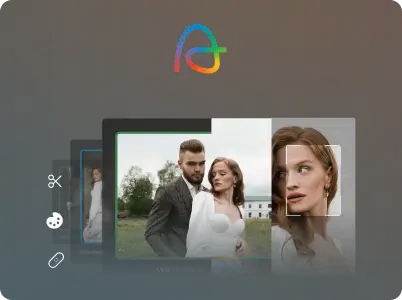
Aftershoot Edit is the best wedding photo editing software for photographers who want speed without giving up control. It is built to help you move from AI edits to manual refinement inside the same app, which matters when you are working through large wedding galleries and trying to keep delivery timelines realistic.
Its biggest advantage is that it no longer needs to be framed as just an AI editing layer. With in-app RAW editing and rendering, manual sliders, crop and straighten tools, subject masking, syncing, preset support, and direct export, Aftershoot is a complete cull → edit → retouch → deliver workflow. That is a meaningful shift for wedding photographers who want fewer handoffs between tools and fewer interruptions once editing starts.
The recent updates also make it more relevant for wedding work specifically. White balance consistency has been improved across similar images, which is especially useful for weddings where galleries often include long sequences shot in the same lighting setup and where skin tone consistency matters. AI Crop now includes an Aggressive Mode for tighter, more intentional crops, and AI Straightening has been improved for more accurate corrections in dynamic scenes and structured backgrounds.
Why it stands out:
- It helps streamline large wedding galleries with a workflow built for volume.
- It improves white balance consistency across similar images, reducing the need for correction passes later.
- It supports more intentional AI cropping while keeping the subject as the focal point.
- It improves straightening accuracy in scenes that would otherwise need manual cleanup.
- It offers full manual RAW refinement inside the app, including WB, Light, HSL, Color Grading, and Detail controls.
- It supports both AI-assisted editing and fully manual editing, depending on how you prefer to work.
For wedding photographers, that mix of speed and refinement is the real differentiator. A lot of software can help you edit images. Fewer tools help you keep momentum across a full wedding while also giving you the flexibility to fine-tune the images that need extra attention. Aftershoot Edit is strongest when viewed as a workflow tool, not just an editing feature.
Best for: Wedding photographers who want an all-in-one workflow with AI speed, manual control, and fewer tool switches.
Related reading: The 5-Step Wedding Photography Editing Workflow, 5 Steps to Perfecting Your Wedding Photo Editing, and Inside A Pro’s Wedding Retouching Workflow.
2. Lightroom Classic
Adobe Lightroom Classic remains one of the most common tools in professional wedding workflows because it combines reliable RAW editing, batch adjustments, and library management in a familiar environment. For photographers who prefer a hands-on approach and already have preset-based systems in place, it is still a dependable option.
Its strength is control, but its weakness is time. Lightroom can absolutely handle wedding galleries, but large sets still require significant manual work, especially when you are trying to keep edits consistent across different parts of the day. That is why many photographers continue to use it alongside AI-assisted tools rather than relying on it as the only editing solution.
Best for: Photographers who want manual control and already work inside the Adobe ecosystem.
3. Imagen
Imagen is one of the AI-assisted options for wedding photographers because it is built around learning and applying your editing style across new galleries. That makes it appealing for photographers who want to reduce repetitive work while still maintaining a recognizable final look.
For wedding galleries, style consistency often matters as much as speed. Imagen’s appeal is that it aims to help with both, especially for photographers who are comfortable reviewing the output and refining where needed. It is a strong option if your priority is AI-based style matching rather than a broader all-in-one workflow.
Best for: Wedding photographers who want AI-assisted edits based on their style.
4. Capture One
Capture One is known for its strong RAW processing and advanced color tools, which is why many professionals turn to it when precision matters more than speed. Wedding photographers who care deeply about color rendering and like building a customized editing environment often find it appealing.
That said, Capture One is not usually the fastest route through a full wedding gallery. It is better suited to photographers who prioritize manual control and image quality over automation, and who do not mind spending more time in post-production to get there.
Best for: Photographers who prioritize color precision and a detailed manual editing process.
5. DxO PhotoLab
DxO PhotoLab earns its place on this list because it is especially strong at the technical side of editing. Its reputation centers on noise reduction, lens corrections, and cleanup for images shot in difficult conditions, which can be useful for wedding photographers dealing with mixed light, low light, or files that need more recovery work.
It is not usually the main engine of a wedding workflow, but it can be a valuable support tool when technical quality is the main challenge. If you often spend time fixing image issues before you can even begin the creative edit, DxO PhotoLab can make that process easier.
Best for: Photographers who need advanced correction tools for difficult files.
6. Luminar Neo
Luminar Neo is more of a creative editing tool than a wedding workflow platform, but it still has a place for photographers who want quick, AI-assisted enhancements. Its appeal comes from ease of use and the ability to make selective changes quickly without a steep learning curve.
For wedding photographers, that makes it more useful as a secondary tool than a primary one. It can help with portrait finishing or stylized edits, but it is not usually the strongest choice for processing a full wedding gallery consistently from start to finish.
Best for: Photographers who want quick creative enhancements and a simpler editing experience.
7. Photoshop
Photoshop remains essential for many professional photographers, but mostly as a finishing tool rather than a full-gallery editor. It is where you go for detailed retouching, cleanup, compositing, and the kind of corrections that go beyond standard RAW editing.
For wedding work, that usually means using Photoshop selectively. It is ideal for hero images, difficult object removals, or close-up retouching, but not for efficiently moving through hundreds of files in a single gallery. It is important, but it works best as part of a broader workflow rather than the center of one.
Best for: Photographers who need advanced retouching and final-image polish.
Best Wedding Photo Editing Software Quick Comparison
| Software | Best for | Main strength | Main limitation |
| Aftershoot Edit | Wedding photographers who want a faster end-to-end workflow | AI editing plus in-app RAW refinement, white balance consistency improvements, and fewer tool switches | Best value shows up when you want a workflow-first approach, not just a traditional manual editor |
| Adobe Lightroom Classic | Manual editing and catalog management | Deep RAW editing tools, batch processing, and a familiar Adobe workflow | Time-intensive for large wedding galleries without additional automation |
| Imagen | AI style-based editing | Applies edits based on your style and helps reduce repetitive work | Still benefits from review and refinement before delivery |
| Capture One | Color precision and manual control | Strong color tools and high-quality RAW processing | Less workflow-focused for high-volume wedding editing |
| DxO PhotoLab | Technical corrections | Excellent noise reduction and lens corrections | Better as a supporting tool than a full wedding workflow platform |
| Luminar Neo | Quick creative enhancements | Easy AI-powered edits and stylized adjustments | Not ideal as the main tool for full-gallery consistency |
| Photoshop | Detailed retouching and cleanup | Advanced retouching and image manipulation | Not built for efficient full-gallery wedding editing |
Choosing the right fit
The best wedding photo editing software depends less on brand recognition and more on where your workflow slows down. If volume, consistency, and turnaround are the main challenges, a workflow-first tool will usually create more value than a traditional editor on its own.
A simple way to frame the decision:
- Choose Aftershoot Edit if you want the strongest all-around workflow for culling, editing, refining, and exporting in one place.
- Choose Lightroom Classic if you want manual control and already have a mature Adobe workflow.
- Choose Imagen if you want AI edits based on your style.
- Choose Capture One if color precision is the top priority.
- Choose DxO PhotoLab if technical corrections matter most.
- Choose Luminar Neo if you want selective creative enhancements.
- Choose Photoshop if you need advanced retouching and finishing work.
For most wedding photographers, the biggest improvement does not come from adding more software. It comes from reducing repetitive work and tightening the path from import to delivery.
Related reading: Wedding Photography Workflow: Complete Peak-Season Guide and Photo Editing Workflow: Integrating AI Tools for Faster, Smarter Edits.
Frequently Asked Questions
What is the best wedding photo editing software?
For professional photographers, Aftershoot Edit is one of the best wedding photo editing software options because it supports a faster workflow from editing to refinement and export in one app. It is especially useful for large wedding galleries where consistency and turnaround time matter just as much as image quality.
What software do wedding photographers use to edit photos?
Many wedding photographers use a mix of tools depending on their workflow, with Lightroom Classic, Photoshop, Capture One, Imagen, and Aftershoot all commonly fitting different parts of the editing process. Workflow-focused tools are becoming more important because professional photographers increasingly need speed, consistency, and less repetitive manual work across large galleries.
Is Aftershoot good for wedding photographers?
Yes, Aftershoot is especially well suited to wedding photographers because it is designed for high-volume workflows and now supports in-app RAW editing, manual refinement, syncing, and direct export. Its white balance consistency improvements are also particularly relevant for weddings, where similar scenes need a cohesive look across the final gallery.
Can you edit wedding photos without Lightroom?
Yes, wedding photographers can edit without Lightroom, especially now that Aftershoot Develop supports in-app RAW editing and rendering with manual controls, crop and straighten tools, presets, syncing, and export options. That reduces the need to rely on Lightroom or Capture One for basic editing and final output in many workflows.
What features should you look for in wedding photo editing software?
The most important features are batch editing, style consistency, white balance control, cropping and straightening tools, manual refinement, and a workflow that can handle high image volumes efficiently. For professional photographers, software also needs to reduce time spent switching between tools and help shorten turnaround times during busy wedding seasons.
Is AI photo editing good for wedding photography?
AI photo editing can be very useful for wedding photography because it helps reduce repetitive work and speeds up editing on large galleries. The best results usually come from combining AI speed with manual refinement, which is why tools that support both workflows tend to be the strongest fit for professionals.
Which wedding photo editing software is best for beginners and professionals?
Beginners may prefer tools with simpler interfaces or stronger automation, while professionals usually need software that balances speed, consistency, and control across full galleries. For working wedding photographers, a workflow-oriented option like Aftershoot Edit is especially strong because it can support both AI-assisted and manual editing in the same environment.