Ask five wedding photographers to describe their style, and you’ll probably get five very different answers.
Documentary. Editorial. Film-inspired. Light and airy. True-to-color. Dark and moody.
The confusing part is that these terms don’t always describe the same thing.
Some wedding photography styles describe how you shoot. Others describe how the finished images look. And most photographers don’t fit neatly into one category anyway.
You could photograph most of a wedding in a documentary style, switch to an editorial approach for couple portraits, and give the entire gallery a film-inspired edit.
So, instead of treating wedding photography styles like rigid boxes, let’s break down what the most common styles actually mean, how they differ, and how you can develop a look that feels like your own.
What is a wedding photography style?
A wedding photography style is the combination of choices that make your photographs recognizably yours.
That usually comes down to three things:
- How you shoot: Do you observe moments as they happen or direct people into compositions?
- How your images look: Do you gravitate toward clean colors, deep shadows, soft tones, dramatic light, grain, or something else entirely?
- How you edit: How do you handle exposure, white balance, color, contrast, skin tones, and the overall consistency of a gallery?
That’s why terms such as documentary and light and airy aren’t quite interchangeable.
Documentary photography primarily describes an approach to capturing the day. Light and airy usually describes the visual treatment of the image.
Your actual wedding photography style can be a mix of both.
Here’s a quick overview:
| Wedding photography style | What defines it | Primarily |
| Documentary | Candid, unscripted storytelling | Shooting |
| Editorial | Directed, fashion-inspired imagery | Shooting |
| Traditional | Structured, posed photographs | Shooting |
| Fine art | Intentional, artistic compositions | Shooting + editing |
| Film / film-inspired | Analog capture or film-like visual treatment | Shooting + editing |
| Light and airy | Bright images, softer shadows and gentle tones | Shooting + editing |
| Dark and moody | Deep tones, contrast and atmosphere | Shooting + editing |
| True-to-color | Natural, believable color | Editing |
| Black and white | Monochrome treatment focused on tone and emotion | Editing |
| Cinematic | Dramatic framing, movement, lighting and color | Shooting + editing |
| Vintage | Nostalgic colors, texture and retro visual treatment | Editing + aesthetic |
11 Popular Wedding Photography Styles
1. Film Aesthetic Photography Style
Film wedding photography has had a major resurgence, but “film wedding photography” can describe two related things.
The first is straightforward: photographing weddings on analog film.
The second is film-inspired digital photography: shooting digitally and creating some of the characteristics photographers associate with film through exposure, color, contrast, and editing.
Depending on the film stock and treatment, those characteristics might include:
- Softer contrast
- Visible grain
- Gentle colors
- Warm skin tones
- Muted greens
- Softer highlights
- A slightly imperfect or nostalgic finish
Film doesn’t have one universal “look,” either. Different films, scanning processes, lighting conditions, and photographers produce very different results.
So if you’re trying to build a film-inspired wedding photography style, get more specific than simply adding grain.
Ask yourself what you actually like about the references you’re saving.
Is it the color? Highlight treatment? Contrast? Texture? Imperfection? Skin tones?
That’s where the style starts becoming yours.
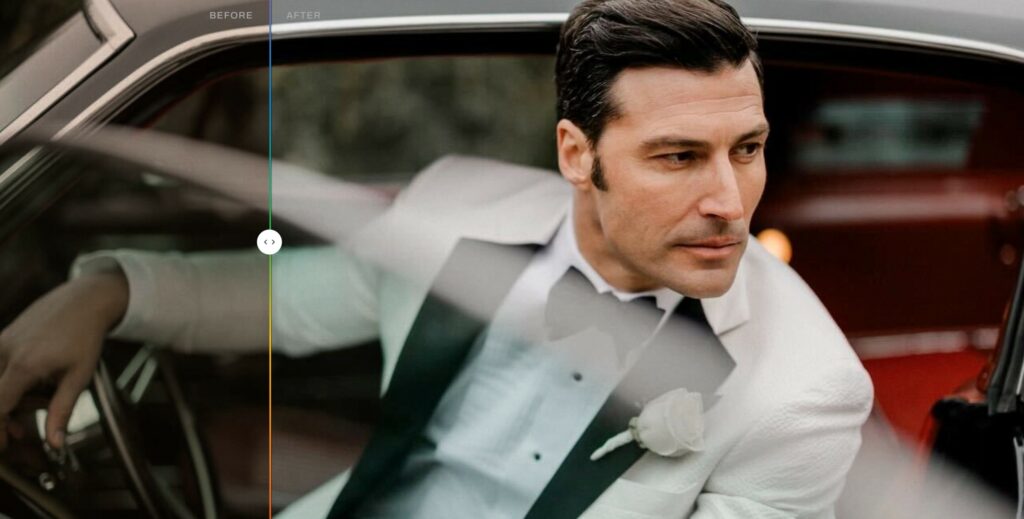
Esteban Gil Collection
This profile captures the essence of famous photographer, Esteban’s style, blending his love for film with digital precision. Drawing inspiration from iconic films, it features soft greens, a gentle mood, and warm skin tones, all balanced with a cool white tone.
2. Editorial wedding photography
Editorial wedding photography borrows heavily from fashion, magazine, and commercial photography.
Think deliberate posing, thoughtful compositions, strong visual direction, carefully selected backgrounds, and images designed to feel polished rather than purely observational.
The photographer plays a more active role here.
You might:
- Direct the couple’s body language
- Reposition hands or clothing
- Choose a particular patch of light
- Build symmetry into the frame
- Introduce movement
- Use flash or other controlled lighting
- Photograph small details with deliberate styling
But shooting editorially doesn’t mean you need to direct the entire wedding.
In fact, many photographers move between approaches throughout the day.
You might photograph the ceremony in a documentary style, create editorial portraits during the couple session, and return to candid storytelling during the reception.
Best suited to: Photographers who enjoy directing subjects, designing compositions, and bringing fashion or magazine influences into weddings.
Watch out for: Over-directing. The strongest editorial images still need to feel connected to the people you’re photographing.
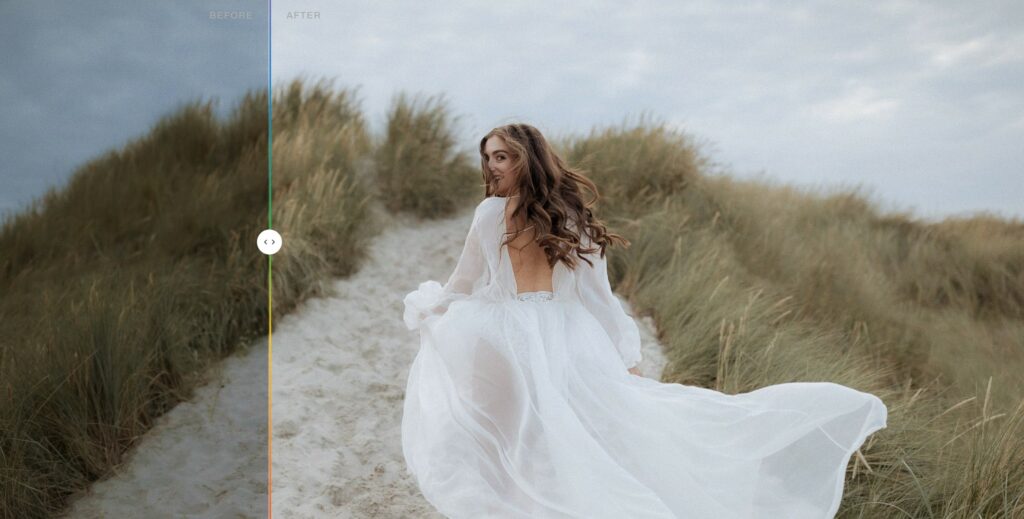
Kreate Naturelle
Inspired by Fuji Color Film and Ilford B&W, Katie Monroe has perfected these presets throughout her career. Perfect for photographers seeking a refined, editorial, and luxurious style, this AI preset offers a timeless yet modern vibe.
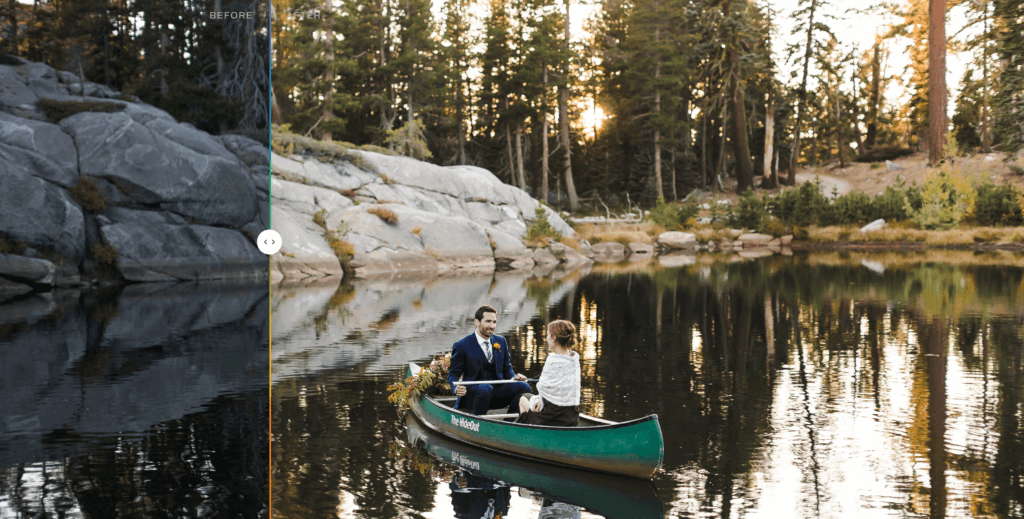
Cherie
Chérie offers a stunning editorial palette, enhancing highlights with soft blues and naturally toned skin for an effortlessly beautiful look. It works beautifully in any lighting and includes a complimentary toolkit for timeless, modern edits. Perfect for weddings, portraits, and family photography!
3. Dark and Moody Photography Style
Dark and moody wedding photography sits toward the other end of the visual spectrum.
Instead of minimizing shadows, you’re often using them deliberately.
The style can include:
- Deeper blacks
- Richer colors
- Strong contrast
- Directional light
- Warm or muted tones
- Silhouettes
- Atmospheric environments
- Deliberately darker exposures
The goal isn’t simply to underexpose photographs.
Good dark and moody photography still needs detail, intentional light, strong skin tones, and a sense of depth.
A candlelit reception, dimly lit hotel room, rainy portrait session, or dramatic sunset can all lend themselves naturally to this approach.
Best suited to: Photographers who enjoy dramatic light, atmosphere, texture, and deeper tonal ranges.
Watch out for: Applying the same dark treatment indiscriminately. A style should support the photograph rather than fight the light that was actually there.
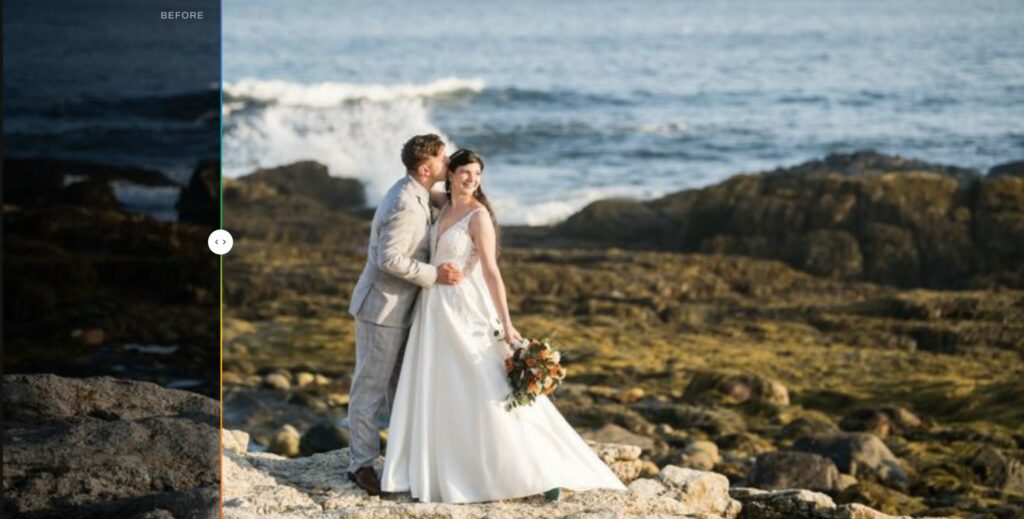
Founder’s style
This profile is inspired by vintage images with bold contrast, deep tones, crushed shadows, and near-blown highlights. Get high contrast, texture, and clarity, creating dynamic, striking images you will absolutely love.
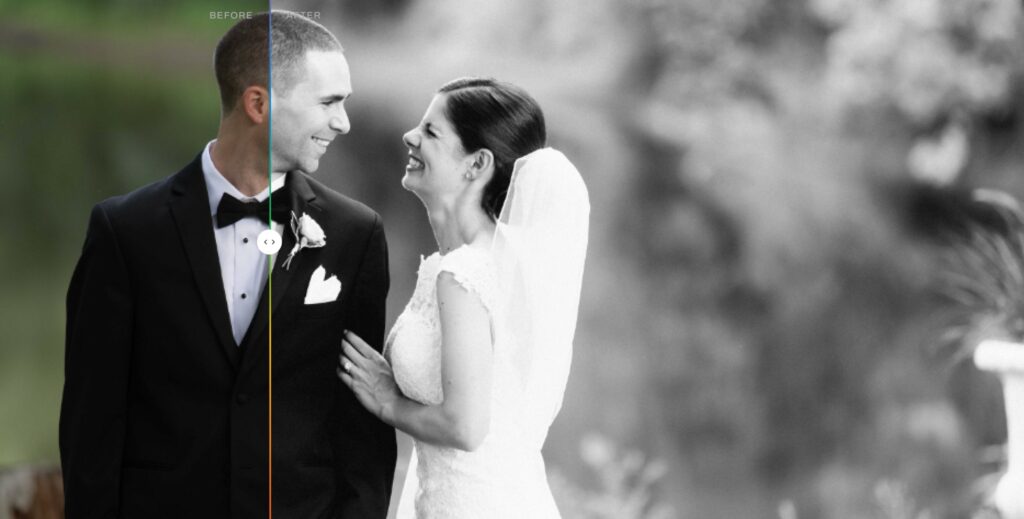
Charcoal cream
This AI Style is a monochromatic masterpiece of deep contrasts, inspired by the timeless appeal of Agfa Scala. It creates a balanced interplay of light and shadow with a refined texture, enhanced by a subtle grain finish.
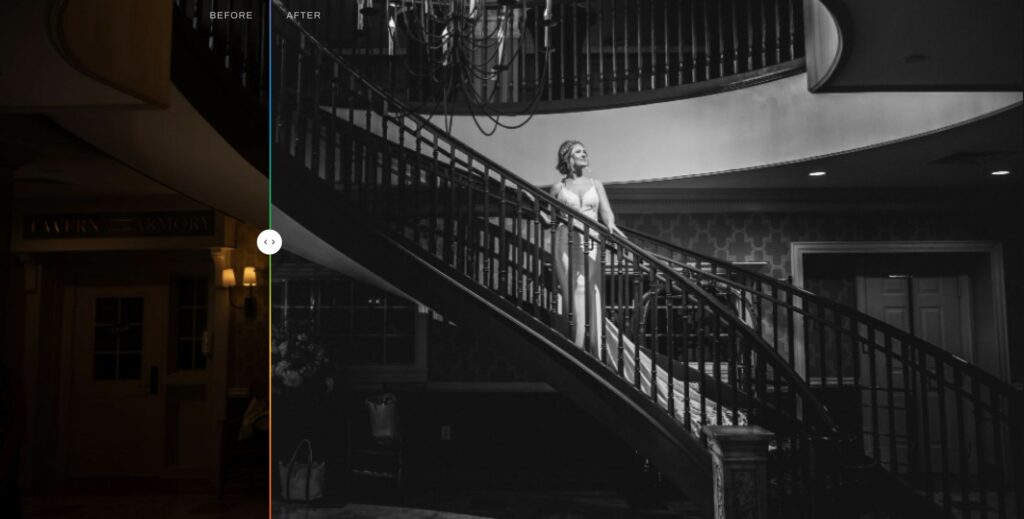
Casablanca
This high-key, black-and-white AI Style offers a truly unique look, blending intense blacks and bright whites for a striking, high-contrast, classic aesthetic.
4. Light and Airy Photography Style
Light and airy wedding photography is known for bright images, softer shadows, clean whites, gentle colors, and an overall romantic feeling.
But it isn’t something you create only during editing.
The look starts while you’re shooting.
Photographers working in this style often look for:
- Soft or diffused natural light
- Bright, uncluttered backgrounds
- Open shade
- Neutral environments
- Flattering exposure on skin
- Softer contrast
Editing can then reinforce that aesthetic with lifted shadows, controlled highlights, restrained contrast, and lighter tonal treatment.
Best suited to: Photographers drawn to softer, romantic imagery and naturally bright environments.
Watch out for: Assuming “light and airy” means making every photograph brighter. Protect skin tones and highlights, particularly in harsh daylight and white wedding clothing.
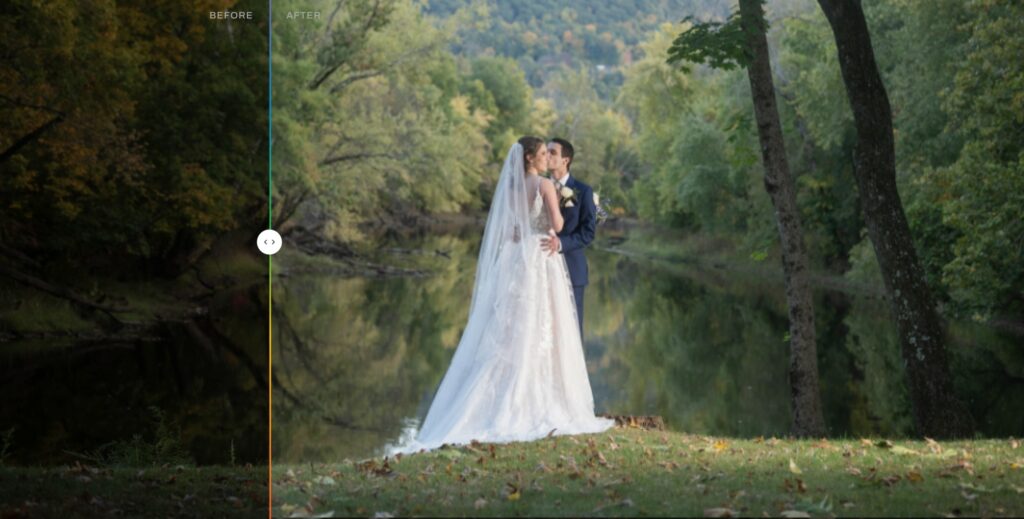
True to Life
True to Life is the perfect profile for a light and airy aesthetic, lifting shadows and balancing highlights seamlessly. It enhances brightness and subtlety, creating fresh, sun-drenched images with effortless charm.
5. Documentary or Photojournalistic Photography Style
Documentary wedding photography is built around photographing the day as it unfolds rather than constantly directing it. Instead of stopping a moment and recreating it, you’re watching for it.
That could be the bride’s dad seeing her for the first time, somebody wiping away a tear during the ceremony, kids running between tables, or friends losing it on the dance floor.
The style is sometimes called photojournalistic wedding photography because the photographer works almost like a visual reporter: observing, anticipating, and building a story from real moments. But documentary doesn’t mean simply standing back and pressing the shutter.
Strong documentary wedding photography still requires deliberate decisions about:
- Composition
- Timing
- Light
- Position
- Lens choice
- Layering
- Backgrounds
- Anticipating interactions
The difference is that those decisions are generally made without disrupting the moment you’re trying to photograph.
Best suited to: Photographers who enjoy observing people, reacting quickly, and telling stories through candid moments.
Watch out for: Using “documentary” as an excuse for passive shooting. You still need to anticipate where the moment is going before it happens.
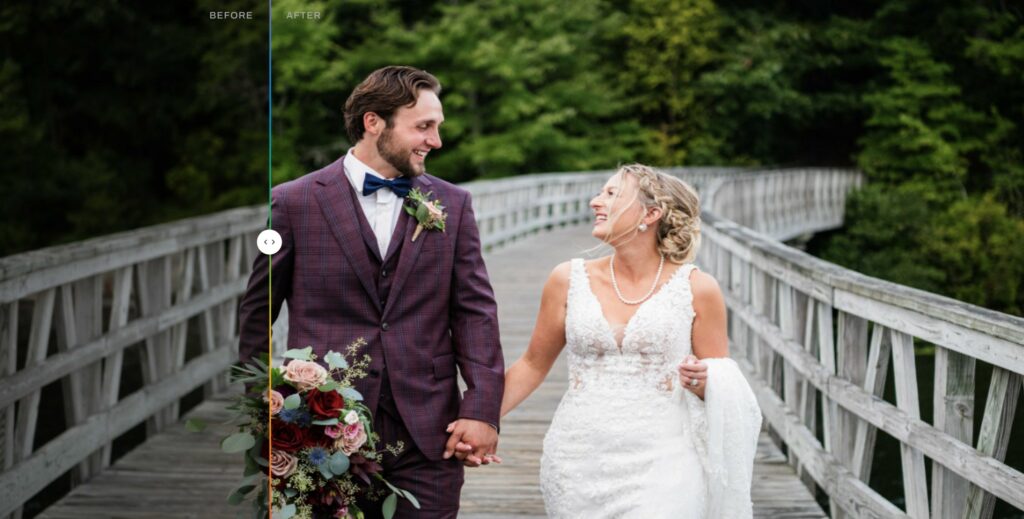
Crispy Cream (RAW photos)
This AI Style transforms RAW files into polished masterpieces. With pristine whites and rich, vibrant colors, it brings depth and vitality to your photos. Each hue stays true to life, neither overpowering nor muted—for a perfectly balanced finish.
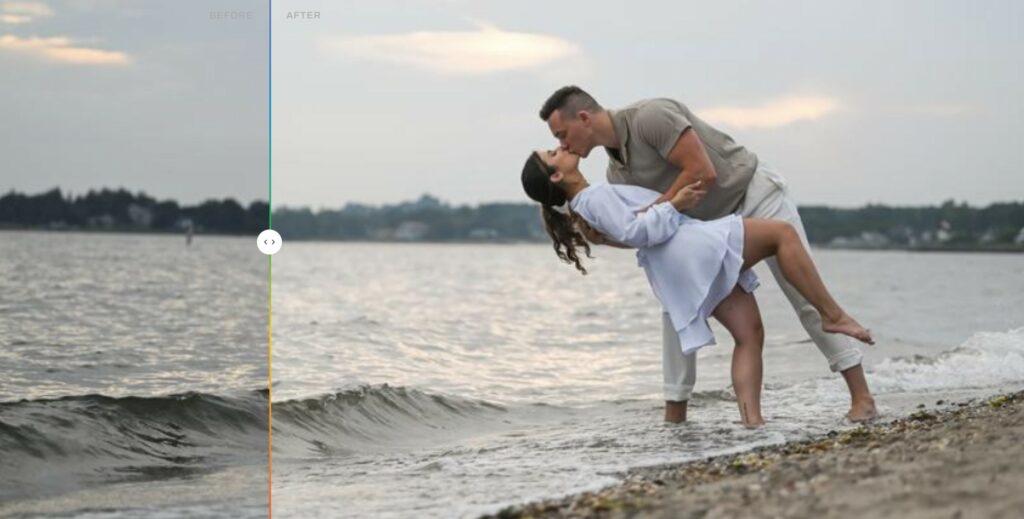
Lemon Zest (Jpegs)
Inspired by bright film photography styles, it enhances your images with beautiful, natural skin tones while maintaining a light, airy flow. Lemon adds a touch of brightness with a creamy and soft finish.
6. Black and White photography style
Black and white deserves a place in the conversation, but it’s important to distinguish it from something like documentary or editorial photography.
For most wedding photographers, black and white is an editing choice rather than a completely separate way of shooting.
Removing color can bring more attention to:
- Expression
- Gesture
- Light
- Texture
- Contrast
- Composition
It can also help when color itself is distracting from the moment. A packed dance floor filled with different-colored lights might become far more coherent in black and white. A quiet emotional portrait might feel stronger without color competing for attention.
But that doesn’t mean every difficult color photograph should automatically become monochrome, though.
Use black and white because it makes the image stronger, not because the white balance is giving you grief.
Use this AI style to achieve this look for your images:
Casablanca
This high-key, black-and-white AI Style offers a truly unique look, blending intense blacks and bright whites for a striking, high-contrast, classic aesthetic (as we mentioned above)
You can also use the Founder’s style to achieve this wedding photography editing style
7. Vintage wedding photography
Vintage wedding photography draws on the visual character of earlier decades to create a nostalgic, timeworn feel.
Unlike film-inspired photography, which often tries to recreate specific characteristics associated with analog film, a vintage wedding photography style can pull from a much broader range of references.
That might include:
- Muted or faded colors
- Warm, sepia-leaning tones
- Softer contrast
- Visible grain
- Slightly desaturated highlights
- Soft focus or diffusion
- Retro compositions or framing
- A deliberately aged finish
The exact look can vary depending on the era you’re referencing. A 1970s-inspired wedding edit will feel very different from one influenced by old black-and-white portraiture or early color photography.
The key is to use those references intentionally rather than simply making an image look “old.”
Best suited to: Photographers who gravitate toward nostalgic imagery, retro color palettes, and a less polished visual finish.
Watch out for: Overdoing the effect. Heavy sepia, excessive grain, or artificially faded colors can quickly start to feel like a filter rather than a cohesive photography style.
If you’re experimenting with a vintage-inspired edit, Aftershoot’s Marketplace also includes AI Styles with nostalgic and film-influenced treatments that can be used as starting points.
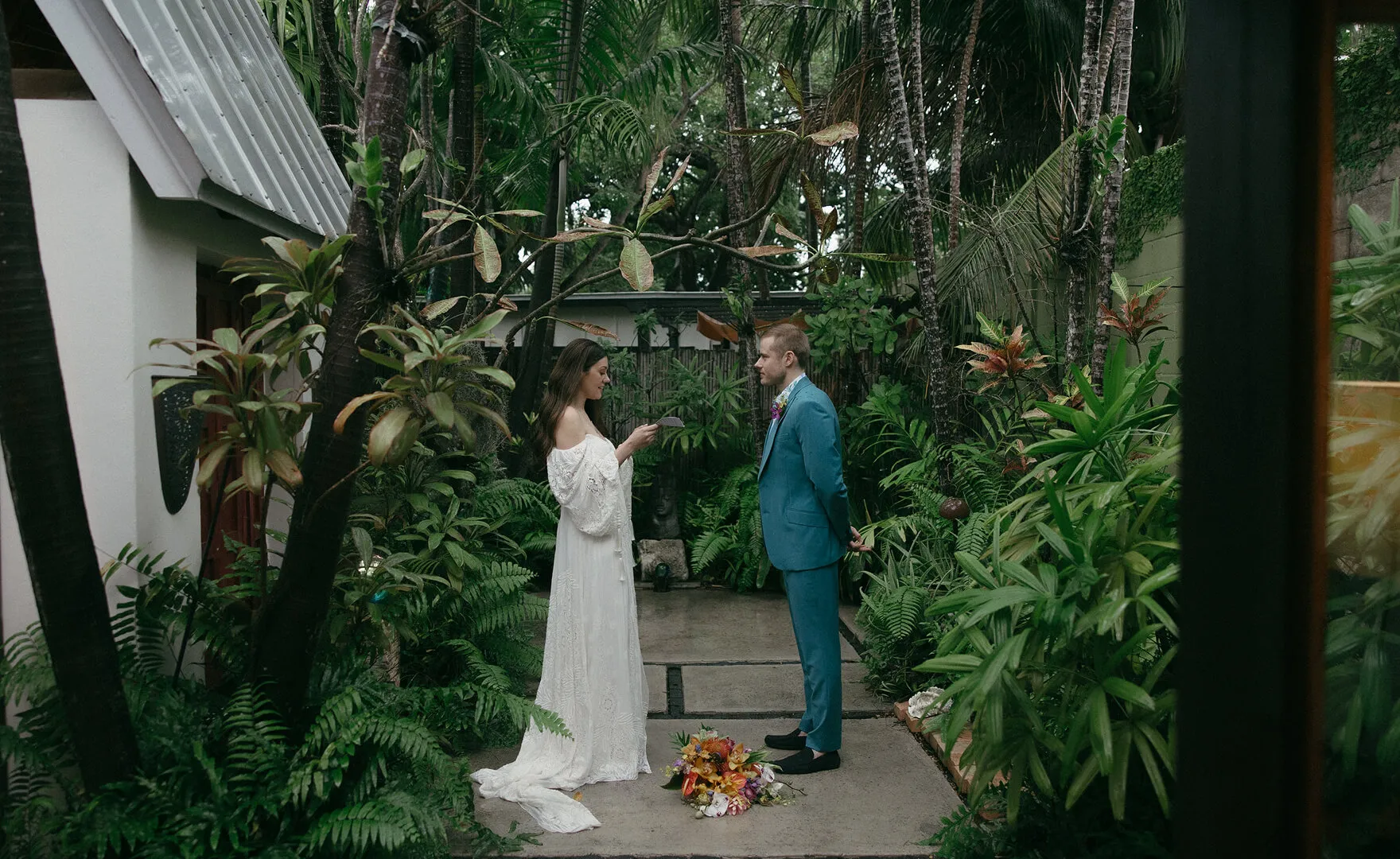
Journal
Journal is an AI preset inspired by famous photographer Joy Zamora’s global travels. It is crafted to be versatile yet full of character. Drawing from his experiences in Bali, Morocco, Mexico, and Italy as a destination wedding photographer, it features soft colors and elegant tones, giving your images a timeless, vintage feel.
You can access 30+ AI styles from the Aftershoot Marketplace
8. Traditional Wedding Photography
Traditional wedding photography sometimes gets dismissed as old-fashioned, but there’s a reason it has lasted.
It’s built around important photographs that are deliberately composed and generally posed: the couple looking at the camera, family groups, wedding-party portraits, the cake cutting, formal portraits, and other key moments.
The photographer typically gives clearer direction than they would when shooting documentary-style.
And even if you would never describe your overall work as “traditional,” chances are you already use this approach somewhere during a wedding.
Family formals are the obvious example.
When you’ve got grandparents, siblings, parents, cousins, and a wedding coordinator waiting for you to finish eight combinations in fifteen minutes, a little structure is your friend.
Best suited to: Photographers who like creating clean, timeless images and giving couples plenty of direction.
Watch out for: Making every photograph feel stiff. Traditional photographs can still have movement, warmth, and personality.
9. Fine art wedding photography
Fine art wedding photography puts greater emphasis on the photographer’s artistic interpretation of a scene.
Rather than simply documenting what’s in front of you, you’re asking: How can I turn this into a photograph that stands on its own?
That might involve:
- Unusual compositions
- Negative space
- Architectural elements
- Reflections
- Intentional use of light and shadow
- Carefully composed details
- Movement or softness
- A more painterly visual treatment
Fine art is particularly difficult to pin down because it isn’t one specific editing recipe.
A fine art photographer may produce bright, delicate imagery. Another may create dark, heavily textured work.
What connects them is intentionality.
Best suited to: Photographers who enjoy slowing down, experimenting with composition, and putting a strong artistic point of view into their work.
Watch out for: Prioritizing the “art” so much that you miss the actual story of the wedding.
10. True-to-color wedding photography
True-to-color wedding photography aims to keep colors believable.
Whites look white. Skin looks like skin. Greenery isn’t pushed dramatically toward blue or yellow. The bridesmaids’ dresses still resemble the color everybody remembers seeing on the wedding day.
That doesn’t mean the images aren’t edited.
In fact, creating natural-looking color consistently across a full wedding can require plenty of decisions around:
- White balance
- Tint
- Exposure
- Contrast
- Saturation
- Skin tones
- Mixed lighting
- Camera profiles
The difference is that the edit isn’t designed to announce itself.
This makes true-to-color particularly appealing to photographers who want a timeless look without tying their portfolio too closely to a strong editing trend.
Best suited to: Photographers who prioritize natural color, consistent skin tones, and a clean finish.
Watch out for: Confusing “true-to-color” with “straight out of camera.” Natural-looking images still need thoughtful editing.
11. Cinematic Wedding Photography
Cinematic wedding photography aims to make individual photographs feel like frames taken from a film.
It often combines:
- Dramatic or directional lighting
- Wider environmental compositions
- Intentional movement
- Layering
- Strong foregrounds
- Unusual crops
- Flash
- Motion blur
- Deliberate color grading
Again, this isn’t purely an editing style.
A cinematic photograph starts with the way you’ve used light, composition, perspective, and movement while shooting. Editing then helps reinforce the mood you’ve already created.
It’s especially effective when you want to make the venue or environment feel like part of the story rather than simply a background.
For a deeper breakdown, see our guide to cinematic wedding photography.
Wedding Photography Shooting Styles vs Editing Styles
This is where wedding photography terminology can get messy.
A photographer might say they’re documentary. Another says they’re light and airy. Someone else describes their work as film-inspired.
All three descriptions can be accurate, but they’re describing different parts of the process.
A shooting style describes how you approach photographing the wedding.
An editing style describes what you do with those photographs afterward.
For example:
- Documentary + true-to-color: Candid storytelling finished with natural color.
- Documentary + film-inspired: Unscripted moments with softer colors, grain, and a nostalgic treatment.
- Editorial + true-to-color: Highly directed portraits with clean, realistic color.
- Editorial + dark and moody: Directed compositions combined with rich shadows and dramatic tonal treatment.
This is also why you don’t necessarily need to “pick one” wedding photography style.
You need to understand the different ingredients well enough to decide which combination feels most like you.
Documentary vs editorial wedding photography: what’s the difference?
Documentary and editorial photography are often presented as opposites.
In practice, wedding photographers frequently use both.
Here’s the simplest distinction:
| Documentary wedding photography | Editorial wedding photography |
| Observes | Directs |
| Prioritizes unscripted moments | Creates intentional moments |
| Minimal posing | More posing and guidance |
| Reacts to what’s happening | Builds the photograph |
| Story-led | Composition and style-led |
Think about a typical wedding. During the ceremony, you may largely work in a documentary way because the moments cannot be recreated. For the wedding-party portraits, you become more directive. During couple portraits, you might lean heavily into editorial composition. At the reception, you switch back into documentary mode as things unfold quickly around you. You don’t need to choose one approach for all eight or ten hours of a wedding.
The more useful question is: When does each approach help you create the strongest photograph?
Can you combine different wedding photography styles?
Absolutely.
In fact, developing a recognizable style usually isn’t about committing yourself to one label.
It’s about finding a combination of approaches that you repeat consistently.
You might love:
- Documentary storytelling
- Editorial couple portraits
- True-to-color editing
- Occasional black and white
- Flash-heavy dance-floor photographs
Put those together consistently and that becomes your wedding photography style.
The danger comes when you’re constantly changing direction simply because another aesthetic is currently popular.
One month everything is warm and grainy. The next it’s cool and desaturated. Then every photograph is direct flash because that’s what your feed is showing you.
Experimenting is useful, chasing every aesthetic isn’t.
How to find your wedding photography style
If you’re still trying to figure out your style, don’t start by forcing yourself to choose a label.
Start with your own photographs.
1. Pull together the work you actually love
Choose 50 to 100 photographs from recent weddings that you would happily put in your portfolio tomorrow.
Don’t pick the images you think will perform best on Instagram.
Pick the ones that feel most like the work you want to make more of.
Then look for patterns.
Do you repeatedly choose:
- Candid interactions?
- Structured portraits?
- Wide compositions?
- Tight emotional moments?
- Flash?
- Natural light?
- Strong shadows?
- Soft colors?
- Clean skin tones?
- Black and white?
You’re looking for repetition.
2. Separate the way you shoot from the way you edit
This makes defining your style much easier.
Try finishing these two sentences separately:
When I’m shooting, I tend to…
When I’m editing, I tend to…
You might realize that your answer is:
I photograph weddings mostly in a documentary way, but I like my final images warm, slightly film-inspired, and low in contrast.
That’s far more useful than trying to decide whether you are simply a “film photographer.”
3. Look beyond wedding photography
Your references don’t have to come exclusively from other wedding photographers.
Study:
- Fashion editorials
- Documentary photography
- Cinema
- Street photography
- Photo books
- Portraiture
- Advertising
- Fine art
Ask what you’re responding to, in those images.
The light? The framing? The color? The energy? That’s often where a more distinctive style begins.
4. Practice one thing at a time
Trying to reinvent your entire visual identity during one wedding is a good way to come home with a very confusing gallery.
Instead, experiment deliberately.
At one wedding, focus on building stronger layered documentary compositions. At another, give yourself ten minutes during portraits to try more editorial posing. Experiment with direct flash during one section of the reception. And then review what worked.
5. Build consistency after you find what works
A recognizable style isn’t created by one hero photograph.
It’s created when a client can move through an entire gallery and still feel like the photographs came from the same photographer.
That’s where your editing workflow matters.
How editing helps create a consistent wedding photography style
A single wedding can take you through window light, midday sun, fluorescent getting-ready rooms, golden hour, candlelight, DJ LEDs, and direct flash.
Maintaining a consistent look across all of that can be harder than developing the look in the first place.
Before thinking about tools, define the choices you’re trying to repeat:
- How warm or cool do you generally like skin tones?
- How much contrast do you use?
- What happens to your greens?
- How do you treat highlights?
- How deep do you want your blacks?
- How saturated should colors feel?
- How much grain or texture belongs in your final image?
Once those choices are clear, build your editing process around them.
If you use Aftershoot, there are a few different ways to do this.
A Professional AI Profile can be trained on your previously edited work so that Aftershoot learns the editing approach you’ve already developed.
An Instant AI Profile can be created from a Lightroom preset and adjusted around your exposure, temperature, and tint preferences.
And if you’re still experimenting, Aftershoot’s Marketplace gives you pre-built AI Styles from Aftershoot and professional photographers that you can use as starting points for different aesthetics.
The important part is the same whichever workflow you choose:
The tool shouldn’t decide what your style is. It should help you apply the style you’ve chosen more consistently.
Which wedding photography style should you choose?
There’s no objectively “best” wedding photography style.
The better question is whether the style fits:
- The work you enjoy creating
- The clients you want to attract
- The way you naturally interact with people
- The environments you usually photograph
- The story you want your galleries to tell
And remember that a photography style isn’t permanent. Your work should evolve as your taste, skill, influences, and clients evolve. And if you think about, the aim isn’t to find a label and stay inside it forever.
It’s to understand your visual decisions well enough that somebody can look at one of your photographs and have a pretty good idea that you made it.
The Right Wedding Photography Styles For You
You define your photo editing style. And finding the right wedding style is key to capturing the essence of one’s special day. Whether you prefer the timeless elegance of classic portraiture, the candid moments of a documentary, or the artistic flair of a light and airy aesthetic, each style offers a unique way to tell your unique story. Ultimately, the best style for you will reflect your personality, vision, and the emotions you want to inspire through your photos.
So, take the time to explore different styles before finding the perfect one. And what’s better than getting your personal AI editing assistant to help you through it all?
Try out your editing assistant with Aftershoot’s FREE trial. Claim it now!
Q1. What are the main wedding photography styles?
Some of the most common wedding photography styles include documentary or photojournalistic, editorial, traditional, fine art, film or film-inspired, light and airy, dark and moody, true-to-color, black and white, and cinematic photography.
Many wedding photographers combine several of these rather than working exclusively in one style.
Q2. What is the most popular wedding photography style?
There isn’t one wedding photography style that works for every photographer or couple. Documentary, editorial, traditional, film-inspired, and natural or true-to-color approaches are all widely used.
Rather than choosing a style simply because it’s popular, focus on the approach that fits the way you like to photograph people and the kind of work you want clients to hire you for.
Q3. What is the difference between documentary and editorial wedding photography?
Documentary wedding photography focuses primarily on observing and capturing unscripted moments as they happen.
Editorial wedding photography involves more direction from the photographer and often draws from fashion photography through deliberate posing, composition, lighting, and styling.
Photographers frequently use both approaches during different parts of the same wedding.
Q4. Is light and airy a wedding photography style or an editing style?
It’s both, but it’s more accurately described as a visual aesthetic than a shooting method.
The light and airy look typically starts with choices around light, exposure, location, and background while shooting, then continues through editing with brighter tones, softer shadows, controlled highlights, and gentler contrast.
Q5. Is black and white a wedding photography style?
Black and white is usually an editing treatment rather than a distinct way of photographing a wedding.
Photographers often convert selected photographs to black and white when removing color helps emphasize emotion, expression, texture, light, or composition.
Q6. Can a wedding photographer use more than one photography style?
Yes. Most photographers use multiple approaches depending on what’s happening.
For example, you might photograph the ceremony documentary-style, use a traditional approach for family portraits, create editorial couple photographs, and edit the entire gallery with a consistent true-to-color or film-inspired aesthetic.
Q7. How do I develop my own wedding photography style?
Start by reviewing the photographs you already love and identifying repeated choices in your lighting, composition, subjects, color, and editing.
Separate your shooting approach from your editing aesthetic, experiment deliberately with new techniques, and pay attention to what you consistently return to.
Your style usually emerges through repetition rather than from choosing a label first.
Q8. How can I keep my wedding photography editing style consistent?
Define the editing decisions you want to repeat across your work, including white balance, exposure, contrast, skin tones, color treatment, highlights, shadows, and grain.
From there, build a repeatable editing workflow. You can edit manually, use presets as starting points, or use tools such as Aftershoot’s AI Profiles to apply an established editing approach across changing lighting conditions.
Ready to spend less time repeating edits and more time refining your style? Try Aftershoot free.