TL;DR
- Photographer burnout mostly stems from broken systems, scattered admin tasks, and endless late-night editing, not a lack of passion for the craft.
- The biggest mental strain happens behind the computer screen; centralizing post-production eliminates decision fatigue and context-switching.
- A stress-free workflow starts by using automated client communication, clear pre-shoot timelines, and AI note-taking tools.
- Automating repetitive tasks builds the necessary mental freedom and time buffer to shoot personal projects, pursue education, and prevent resenting your business.
- Before turning away clients or reducing income, evaluate and repair the friction points in your website, inquiry process, meeting notes, and edit handoffs.
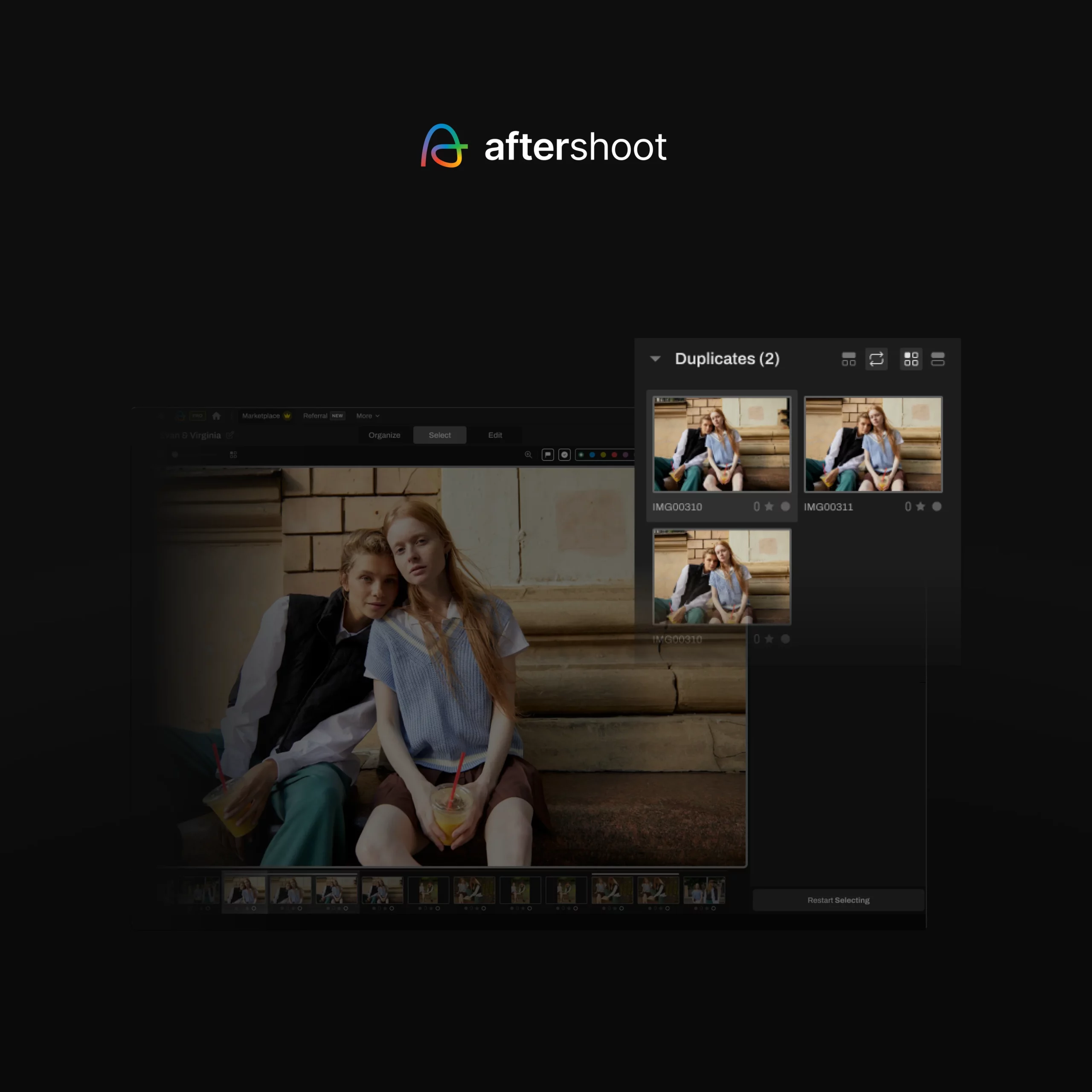
- Aftershoot eliminates post-production burnout by automating backup, culling, RAW editing, retouching, and gallery delivery under a single application overnight.
Many photographers enter the industry driven by the sheer love for art and storytelling. Yet, burnout often creeps in, not because we stop loving photography, but because our business systems fail us.
You know the signs: dreading the next booking instead of looking forward to it, a backlog of galleries you can’t face, evenings that disappear into editing instead of time with your family.
After thirteen years in the industry, I’ve learned that burnout is rarely about the act of shooting. It’s about inefficiencies, manual tasks, and scattered processes that slowly consume your time, energy, and creativity.
In this article, I’ll walk through where a typical photographer’s workflow actually breaks down, from first client contact to final gallery delivery, and the systems that let me prevent photographer burnout without cutting my client load: automation for the repetitive parts, and real boundaries for the rest.

Where Photographer Burnout Actually Starts: Covering your Entire Workflow from Inquiry to Delivery
Good photography workflow systems cover the entire client relationship (not just editing) and most burnout starts in the half you never think of fixing.
- Before the Shoot: Your Inquiry and Booking Process
Many photographers think “workflow” begins after the shoot: importing, backing up, culling, editing, exporting, and delivering. Those steps matter, but they’re only one part of your system.
Your workflow truly starts the moment a potential client discovers you. Consider these questions:
- How do ideal clients find you?
- Does your website clearly communicate who you are and who you serve?
- Are you investing in SEO and creating blog content that answers real questions clients search for?
- Is your inquiry process smooth and clear?
- What happens after someone contacts you? How fast do they hear back? How do they book?
Every touchpoint should be intentional; documenting and standardizing your processes reduces repetitive tasks, eliminates unnecessary back-and-forth, and frees up valuable mental space. The less time you spend putting out fires or answering the same questions, the more time and energy you can dedicate to creating great images and delivering an exceptional client experience.
- Shoot Day: Stress Comes From the Missing Plan, Not the Wedding
Wedding days rarely become stressful because of “unexpected” events. They become stressful when there isn’t a plan, so let’s build one:
- Confirm timelines and key moments
- Understand important family relationships
- Scout or confirm locations and logistics
- Set expectations clearly with clients well before the day
When clients know what to expect, they arrive relaxed and confident. When you know what’s happening (and when), you can stop worrying about logistics and focus on creative work.
Let’s Redesign the Workflow: Where Automation Actually Removes the Load
Photography burnout is rarely caused by shooting a 12-hour wedding, it’s caused by the weeks spent behind a computer afterward: late-night culling, editing, and retouching while family time slips away.
Again, the problem isn’t photography. It’s post-production taking over your personal life and mental health. When your business consistently steals time from your family, burnout becomes almost… inevitable. The solution is to implement processes and tools that reduce manual work, starting with the two biggest time sinks: editing, and client organization.
- Post-Production, Handled Overnight
Just for the record, I don’t use AI to replace creative decisions, I use it to eliminate repetitive tasks that don’t require creativity. Aftershoot has been a game changer because it centralizes my post-production. With Aftershoot, I can:
- Import images and create immediate backups to an additional drive
- Automatic culling with my preferences
- RAW editing and retouching, aligned to my profile
- Gallery delivery
All of this, in one place. Here’s what that actually looks like day to day:
- Get home from a shoot
- Import and back up in Aftershoot
- Press one button, and all the images are culled and edited overnight with my profile
- In the morning, I fine-tune, upload the gallery, and deliver
Yes, it’s that simple. Instead of bouncing across multiple apps and moving files around, I refine the creative parts and get time back for family and growth.
2. Client Organization, Automated Too
The other biggest improvement in my business has nothing to do with cameras, it’s how I organize information. Two tools I love for client meetings:
- Granola AI
Summarizes meetings, organizes action items, and helps build timelines. I inform clients that our conversation will be recorded and summarized. This lets me stay present without frantic note-taking.
- Pod Note Pro
A dedicated AI note-taking device that records conversations, creates searchable transcripts, and summarizes key points. I press one button, record, and it organizes everything in the app.
These tools remove a major source of stress, because you’re not constantly trying to remember everything. They make me feel (and appear) prepared, improving the overall client experience even before someone’s actually booked.
Now, Let’s Build Sustainable Habits (since the systems are in place)
Automation removes the busywork, but avoiding burnout as a photographer long-term also takes documented habits: SOPs, boundaries, and protected creative time, so the freed-up hours don’t just get absorbed by more bookings.
It sounds counterintuitive, but structure creates freedom. Standard Operating Procedures (SOPs) for repetitive tasks take pressure off your memory and enforce consistency. When you rely on documented processes instead of improvisation, you:
- Make fewer mistakes
- Reduce stress and decision fatigue
- Communicate more consistently
And most importantly, you gain mental space to be creative. I’ll give you a personal example: as my business became more organized, I became more creative. With fewer logistics to worry about, I could invest more energy into storytelling, composition, and client experience.
That mental space is what makes room for the part of this job that actually keeps you in it: personal work. When you’re under constant deadlines, your goal shifts from creating meaningful work to “just finishing,” and that mindset usually lowers quality and undermines client experience. Photographers who evolve year after year aren’t the ones working the longest hours, they’re the ones who create margin to experiment, attend workshops, try new techniques, and pursue personal projects. For me, walking around New York City and shooting street photography is therapeutic. It helps me practice composition, portraiture, and storytelling, and reconnects me with why I fell in love with photography.
Closing Thoughts: You Need to Fix your Systems, Not Just your Schedule
If you’re overwhelmed, stop asking: “Should I book fewer weddings?”, instead, ask: “Which part of my business is creating unnecessary stress?”
Your website or SEO strategy, your inquiry and booking process, client communication, or time spent culling and editing, each one has a fix.
Once I stopped spending every spare hour buried in post-production, I had the time and confidence to pursue education, partner with brands, speak at conferences, and build a career I genuinely love. Burnout isn’t always a sign you’re working too much. More often than not, it’s a sign that your systems haven’t evolved alongside your business. Fix the systems, and you may discover the passion you thought you’d lost was there all along, buried beneath inefficient processes.
Ready to give your post-production workflow the same fix? (See how Aftershoot Complete handles culling, editing, retouching, and delivery in one pass)
FAQs for Preventing Photographer Burnout
Q1. How do you recognize burnout as a photographer?
Photographer burnout manifests as mental exhaustion, emotional detachment from client work, and overwhelming dread toward post-production tasks like culling and editing. Rather than feeling excited after a shoot, burned-out photographers feel trapped by accumulating computer work, leading to constant decision fatigue, lower creative output, and slipping personal time.
Q2. How can workflow systems help prevent photographer burnout?
Workflow systems prevent burnout by replacing manual, repetitive decisions with predictable Standard Operating Procedures (SOPs) and automation. Structuring tasks, such as client onboarding, pre-shoot questionnaires, meeting summaries, and edit handoffs, reduces mental load, prevents logistical mistakes, and creates time buffers for rest and creative exploration.
Q3. What parts of a photography workflow can be automated?
Photographers can automate almost every stage of their business outside of actual camera operation:
Inquiries & Bookings: Using CRMs to send automated lead responses, contract templates, and invoice reminders.
Client Meetings: Using AI tools like Granola AI or Pod Note Pro to record, transcribe, and summarize client timelines without manual note-taking.
Post-Production: Using Aftershoot to automate file backups, image culling, batch RAW color grading, and portrait retouching overnight.
Gallery Delivery: Automating client proofing uploads and print store workflows directly from post-production software.
Q4. Why does post-production cause more burnout than shooting?
Post-production is the primary driver of burnout because a single 10-hour shoot can trigger 20 to 30 hours of tedious screen time. Sorting through thousands of RAW files, zooming in to check focus, and individually editing images steals time away from family and personal life, transforming a creative passion into an exhausting administrative burden.
Q5. How does Aftershoot help photographers avoid burnout?
Aftershoot prevents post-production burnout by consolidating backup, culling, editing, retouching, and gallery delivery into a single automated ecosystem. Photographers can import RAW files after a shoot, run automated culling and editing profiles overnight, and wake up to a finished gallery ready for final fine-tuning, saving dozens of manual computer hours per shoot.