TL;DR
- Culling 4,000 to 8,000 RAW files after a 12-hour wedding shoot is the biggest time bottleneck for professional wedding photographers.
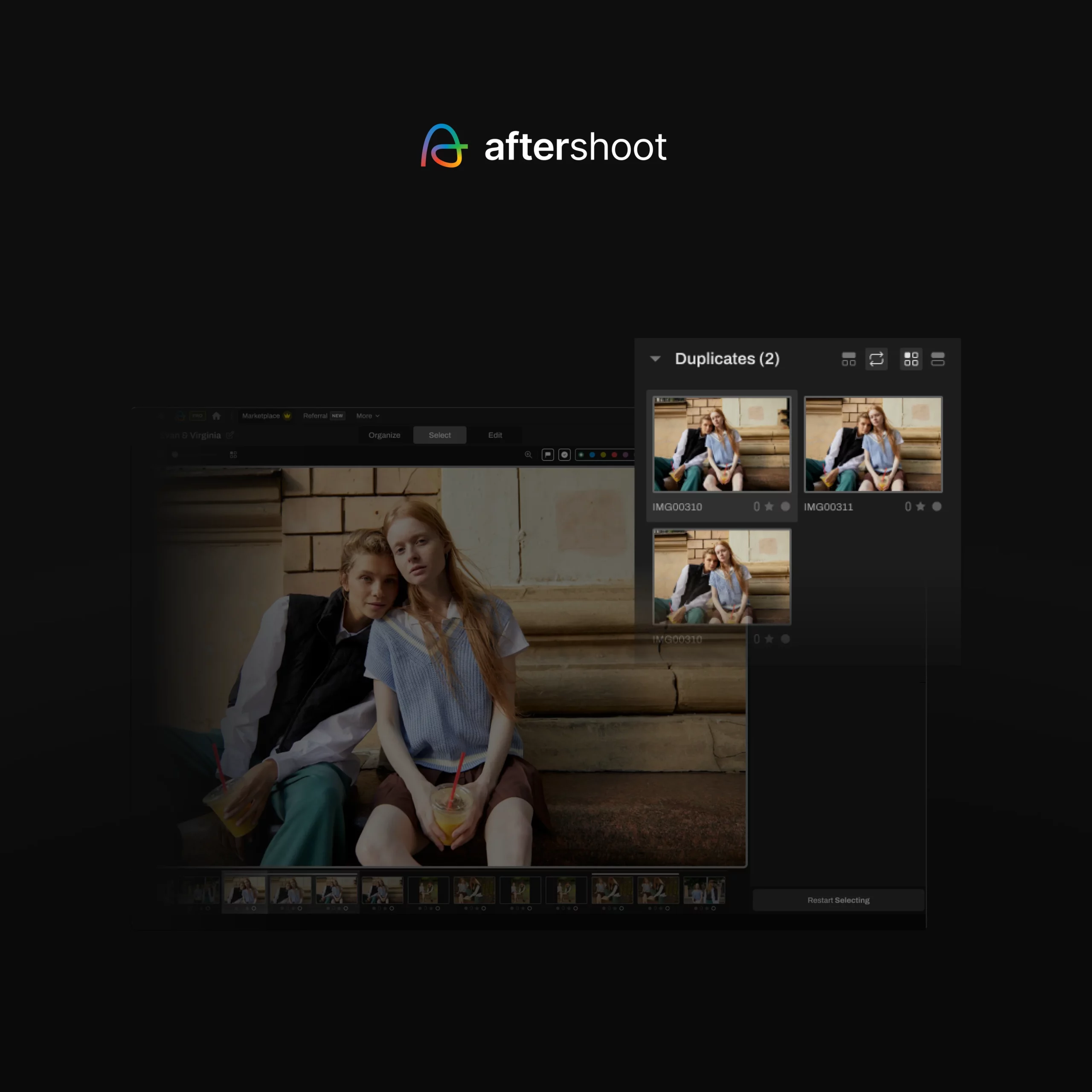
- Modern AI culling software automatically groups duplicates, detects soft focus, identifies blinks or poor expressions, and flags rejection candidates in minutes.
- AI tools act as intelligent assistants rather than replacements, writing star ratings and color labels to non-destructive XMP metadata while leaving the final artistic selections in the photographer’s hands.
- Lightroom is ideal for non-AI catalog management, Imagen AI excels at editing over culling, and FilterPixel suits photographers wanting aggressive auto-reduction features like ‘Deep Cull.’
- Aftershoot is the best overall AI culling software for wedding photographers because it combines high culling accuracy, full offline processing, and an all-in-one ecosystem for culling, editing, retouching, and gallery delivery.
- Aftershoot’s flat subscription rate ($500–$750/year) saves high-volume photographers over $8,000 annually compared to Imagen AI’s pay-per-image pricing model (~$10,000 for 150k images).
AI culling has changed the careers of countless wedding photographers, mine included. It sounds a bit dramatic but, I can unquestionably say that AI has given me the ability to focus on other things that can improve my career and personal life.
There was a time when culling was the most-dreaded part of my workflow.
I’d come home after photographing a 10-12 hour wedding with anywhere from 4,000-8,000 RAW files waiting for me. Then came the tedious process of importing everything, creating backups, opening Lightroom, waiting for previews to build, and spending hours deciding which images to keep before I could even begin editing.
Fast forward to today, AI has completely changed that process.
Instead of spending hours clicking through thousands of nearly identical images, I can now let AI do the heavy lifting while I focus on other projects, spend more time with my boys and family, or simply get some sleep! It has never been easier to implement a proper AI workflow that enables me to get my life back.
However with so many culling software options available today, one question keeps coming up:
Which AI culling software is actually the best for wedding photographers?
After using multiple platforms throughout the years, here are my thoughts….
When I evaluate AI culling software, I don’t really care who can advertise the fastest benchmark. I feel like when a company tells me they can cull through 10,000 images in 10 minutes, it makes absolutely no difference to me and it is not a selling point.
I care about whether the software actually saves me time.
For wedding photographers, that means looking at things like:
- Accuracy
- Speed
- Duplicate detection
- Focus detection
- UI and workflow
- Integration with editing/ retouching/ deliverables
Most importantly… does it fit naturally into the workflow of someone photographing thousands of images every weekend?
Now, onto the comparisons between the bigger players in this genre…
Here’s My List of the Best AI Culling Software for Wedding Photos
1. Lightroom AI Culling
I’ll start with Lightroom because it’s the software almost every photographer already owns.
The biggest advantage Lightroom has isn’t actually its AI culling.
It’s the catalog.
I’ve always been a huge fan of Lightroom’s cataloging system. Its organizational structure is still one of the best available, and if you’re someone who relies heavily on catalogs, collections, keywords, and long-term organization, Lightroom continues to shine.
That said, Lightroom’s AI culling still feels very much in its infancy.
From my experience, Adobe seems to be positioning it more toward portrait photographers or photographers working with smaller sessions rather than someone importing thousands of wedding images every weekend.
The interface also didn’t feel particularly intuitive.
I found myself wondering:
- Where are the settings?
- How do I adjust the AI?
- Why does this workflow feel way more complicated than it needs to be?
Nothing about it felt impossible to use, it simply felt… pretty clunky.
I’m excited to see where Adobe takes this feature over the next updates because they have incredible engineering resources behind them. I have no doubt it will continue improving.
But today, if I were recommending software specifically for wedding photographers, Lightroom’s AI culling wouldn’t be my first choice.
2. Aftershoot
If someone asked me today which AI culling software I’d recommend to a wedding photographer, my answer would be Aftershoot.
Aftershoot was the original AI culling software built specifically for photographers.
More importantly, it was built by photographers who understand exactly what it’s like to come home with thousands of images after every wedding. And that experience shows throughout the entire application.
The latest 2.0 update has dramatically improved the speed, interface, and overall accuracy.
But for me, the biggest advantage isn’t just the culling, it’s the workflow.
Today my workflow looks something like this:
- Get home from the wedding
- Import images
- Create backups
- Click one button to start culling and editing
- Go to bed
By the time I wake up the next morning, my images have already been culled and edited.
Instead of waiting for Lightroom previews to render before I can even begin working, I’m immediately reviewing final selections and making creative decisions.
Even better, I no longer have to jump between multiple pieces of software.
I can:
- Cull
- Edit
- Fine-tune edits manually
- Retouch
- Export to a gallery
All without leaving Aftershoot. It’s actually (unbelievably) impressive how they’ve put all of my post wedding workflow into one software.
That alone has dramatically improved my workflow.
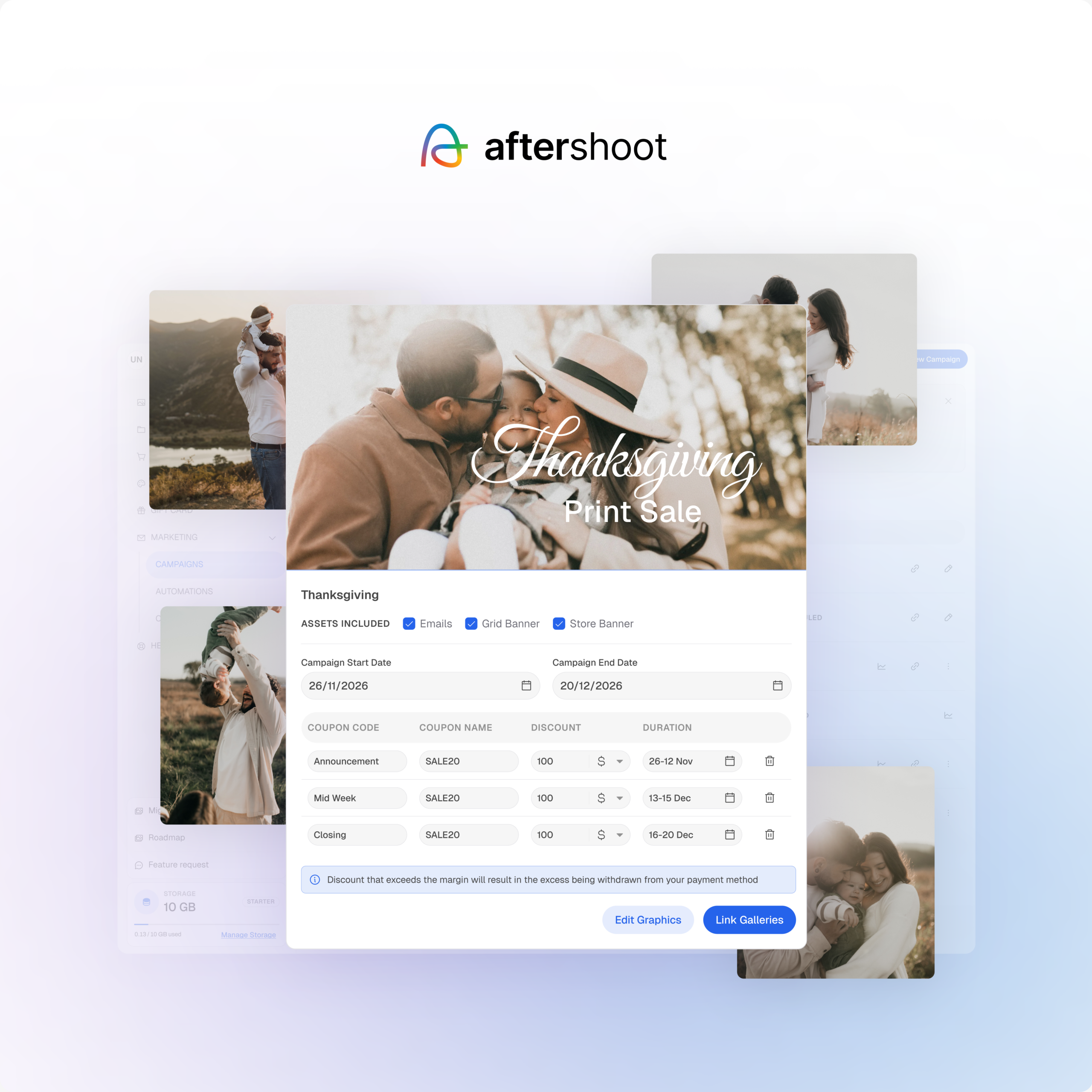
And now, with the addition of Galleries, my entire post-wedding workflow now lives inside a single ecosystem: Aftershoot.
I leave a wedding…
- Import
- Back up
- Cull
- Edit
- Retouch
- Deliver the gallery
All from one platform
For someone photographing weddings every weekend, that simplicity is incredibly valuable.
3. Imagen AI
Imagen has always impressed me with its editing. In fact, I think its AI editing could be comparable to Aftershoot’s.
However, where things started falling apart for me was the culling. Out of every platform I tested, Imagen had the lowest culling accuracy.
I found myself spending more time correcting the AI than I wanted. And if I’m constantly fixing AI decisions, the software isn’t really saving me time.
Another consideration is pricing. Imagen uses a pay-per-image model.
For lower-volume photographers, this may not be a huge issue, but for wedding photographers shooting large numbers of weddings every year, it becomes a very different conversation.
Let’s assume I’m a high-volume photographer who typically culls and edits roughly 150,000 images per wedding season. At Imagen’s cost of approximately $0.07 per image, the total cost per session would come to around $10,000.
However, with Aftershoot, I pay a flat annual subscription, roughly $500-$750, to cull and edit an unlimited number of images. Plus, with Galleries being incredibly affordable. I can have my entire post wedding workflow for under $1000!
That difference is huge.
Personally, I’d much rather keep an extra $8,000+ in my business each year and invest it elsewhere.
4. FilterPixel
FilterPixel is the software I’ve spent the least amount of time using, so I don’t think it would be fair for me to make sweeping conclusions about it.
One feature that immediately stood out was ‘Deep Cull’.
I think it’s an interesting concept, and I can absolutely see photographers finding value in it.
As much as I value AI, I also believe photography is a deeply human craft. I don’t want my culling process to be completely hands-off.
I want to review my images, refine the selections, and teach the AI to better understand my preferences over time. While AI will continue to improve, I still want the final say. That’s where photographers will always have an edge, we bring context, emotion, and creative judgment that AI simply can’t replicate.
So, while a deep cull is a fancy way to get people excited, for me personally, though, it isn’t enough to convince me to switch from Aftershoot.
I’ve always believed:
It’s better to have it and not need it than need it and not have it.
I’d rather AI give me a few extra images that I can remove myself than accidentally throw away an image I wish I had delivered.
Because of that philosophy, I generally prefer conservative culling over aggressive culling.
Which AI Culling Software for Wedding Photos Would I Choose?
Choose Lightroom if…
- You already live inside the Lightroom ecosystem.
- Cataloging is essential to your workflow.
- You don’t mind that AI culling is still evolving.
Choose Aftershoot if…
- You’re a high-volume wedding photographer.
- You want to minimize manual work.
- You value having multiple workflow tools under one roof.
- You want one platform for importing, culling, editing, retouching, and gallery delivery.
For my workflow, that’s incredibly difficult to beat.
Choose Imagen AI if…
- Editing is your primary focus.
- You don’t mind a pay-per-image pricing model.
- You’re photographing fewer images each year, making usage costs less of a factor.
The editing feature is genuinely excellent, I simply found the culling less accurate for my workflow.
Choose FilterPixel if…
- You’re interested in experimenting with features like Deep Cull.
- Your culling philosophy aligns with more aggressive image reduction.
If you prefer AI to narrow your galleries down as much as possible, it may fit your workflow well.
Final Thoughts
The best AI culling software isn’t necessarily the one with the most features. It’s the one that disappears into the background and lets you spend more time creating, serving your clients, and growing your business.
For high-volume wedding photographers and workflows, Aftershoot continues to be the platform that checks the most boxes. It’s accurate, fast, designed around the realities of wedding photography, and keeps nearly my entire wedding workflow under one roof. That combination has saved me countless hours and dramatically simplified how I work.
At the same time, every photographer’s workflow is different. Lightroom remains unmatched for cataloging, Imagen offers excellent AI editing, and FilterPixel brings unique ideas like Deep Cull to the table.
The right choice ultimately depends on how you shoot, how many images you process each year, and what part of your workflow you value most. My recommendation is to choose the tool that removes the most friction from your business, because the less time you spend behind a computer, the more time you can spend doing what made you become a photographer in the first place.
FAQs for Best AI Culling Software for Wedding Photos
Q1. What is the best AI culling software for wedding photos?
Aftershoot is the best overall AI photo culling software for wedding photographers. Built specifically for high-volume shoots, it automatically groups duplicates, evaluates sharp focus, and detects closed eyes or poor expressions across thousands of RAW files.
Unlike competitors that charge per photo, Aftershoot offers a flat annual subscription for unlimited culling. It also runs locally on your computer without the internet and combines culling, AI editing, portrait retouching, and client gallery delivery inside one application.
Q2. How does AI photo culling work for wedding photography?
AI photo culling uses computer vision algorithms to review thousands of RAW wedding images in minutes. It scans your gallery using three main criteria:
Focus & Sharpness: Detects soft focus and motion blur during fast action.
Expressions & Blinks: Identifies closed eyes and awkward facial expressions in portraits and key moments.
Duplicate Grouping: Clusters burst shots together, tags the sharpest frame, and presents variations side-by-side.
The AI applies star ratings, color codes, or rejection tags to your file metadata without modifying or deleting your original RAW files.
Q3. Why is Aftershoot better than Lightroom for AI photo culling?
While Adobe Lightroom Classic is an industry standard for catalog organization, its AI culling tools are still in their infancy and better suited for smaller portrait sessions.
Aftershoot outperforms Lightroom for wedding workflows because:
Zero Rendering Delays: It analyzes local RAW files instantly without making you wait for Lightroom catalog previews to build.
Granular Control: You can adjust culling strictness (from lenient to strict) to ensure
All-in-One Workflow: You can transition directly from culling into AI editing and gallery delivery without switching apps.
Q4. How much does AI culling software cost for wedding photographers?
AI culling software uses two main pricing models:
Flat-Rate Subscriptions (Aftershoot): Culling-only plans start at $120/year, while complete workflow plans (unlimited culling, editing, retouching, and galleries) run ~$540–$720/year.
Pay-Per-Image Models (Imagen AI): Charges around $0.05–$0.07 per photo. Processing 150,000 images per season can cost upwards of $8,000 to $10,000 annually in usage fees.
Included Tools (Lightroom): Billed via Creative Cloud subscriptions (~$11.99/month), though its native AI culling remains limited.
Flat-rate options save high-volume wedding photographers thousands of dollars every season.
Q5. Can AI culling software replace human judgment in wedding photography?
No. AI culling is an assistant designed to eliminate tedious mechanical work, like removing blurs, closed eyes, and redundant burst frames.
It cannot evaluate subjective or artistic intent. For example, an algorithm might flag intentional motion blur or a quiet, tearful moment as a flaw, whereas a human recognizes its storytelling value. You maintain final review and veto power over every AI selection.
Q6. Does AI culling software delete my original RAW files?
No. AI culling software operates 100% non-destructively. Tools like Aftershoot write ratings, flags, and color labels into sidecar XMP files or internal software caches. Your original RAW files remain untouched, and all ratings seamlessly sync when imported into Adobe Lightroom Classic or Capture One.
Q7. What software do professional wedding photographers use for post-production?
Most high-volume wedding photographers use a four-part software stack:
AI Culling: Aftershoot or FilterPixel (for fast duplicate sorting and facial analysis).
AI & RAW Editing: Aftershoot Edit or Adobe Lightroom Classic (for global style matching and color grading).
aftershoot.com
Pixel Retouching: Aftershoot Retouch or Adobe Photoshop (for skin smoothing and object removal).
Gallery Delivery: Aftershoot Galleries or Pic-Time (for client proofing and print sales).