TL;DR: Narrative Select speeds up manual culling by flagging closed eyes and missed focus, but requires you to make every final selection. Photographers seeking more automation typically switch to Aftershoot for full AI-driven culling at a flat rate, Imagen for cloud-based pay-per-image culling, FilterPixel for simple “Accepted/Rejected” workflows, or Photo Mechanic for lightning-fast manual ingestion.
If you’ve been using Narrative Select for photo culling and are hitting the limits of the free tier or wondering if there’s a better AI workflow out there, you’re not alone. While Narrative is a popular choice for fast, manual culling with AI assistance, it’s far from the only tool designed to cut down the hours you spend staring at RAW files.
Why Photographers Outgrow Narrative Select
Narrative Select’s core pitch is that it’s a “hybrid” tool: you’re still doing a manual cull, but the AI helps by highlighting blurry images, out-of-focus subjects, and closed eyes. Features like the Closeups panel are great for quickly checking group shots.
But as your business scales, this hybrid approach can start to feel like it’s not doing enough of the heavy lifting. If you’re shooting weddings or high-volume events, you don’t just want software to tell you which photos are blurry; you want software to actually group the duplicates, pick the best one, and hide the rest. Plus, once you move past Narrative’s free trial – which is limited to six projects – you’re paying a subscription for a tool that still requires you to make every final decision manually.
If you’re specifically comparing the two platforms, see how Aftershoot compares with Narrative across culling, editing, workflow, and other key features.
So if you’re evaluating alternatives, here’s what’s actually worth your time.
4 Narrative Select Alternatives Worth a Look
1. Aftershoot: The Best Overall Alternative
If Narrative Select is an “AI assistant” that sits next to you while you drive, Aftershoot is the autopilot that takes the wheel. Aftershoot doesn’t just flag bad photos; its AI actually analyzes your entire shoot, groups duplicate images, and automatically selects the best photos from each sequence.
What makes it stand out:
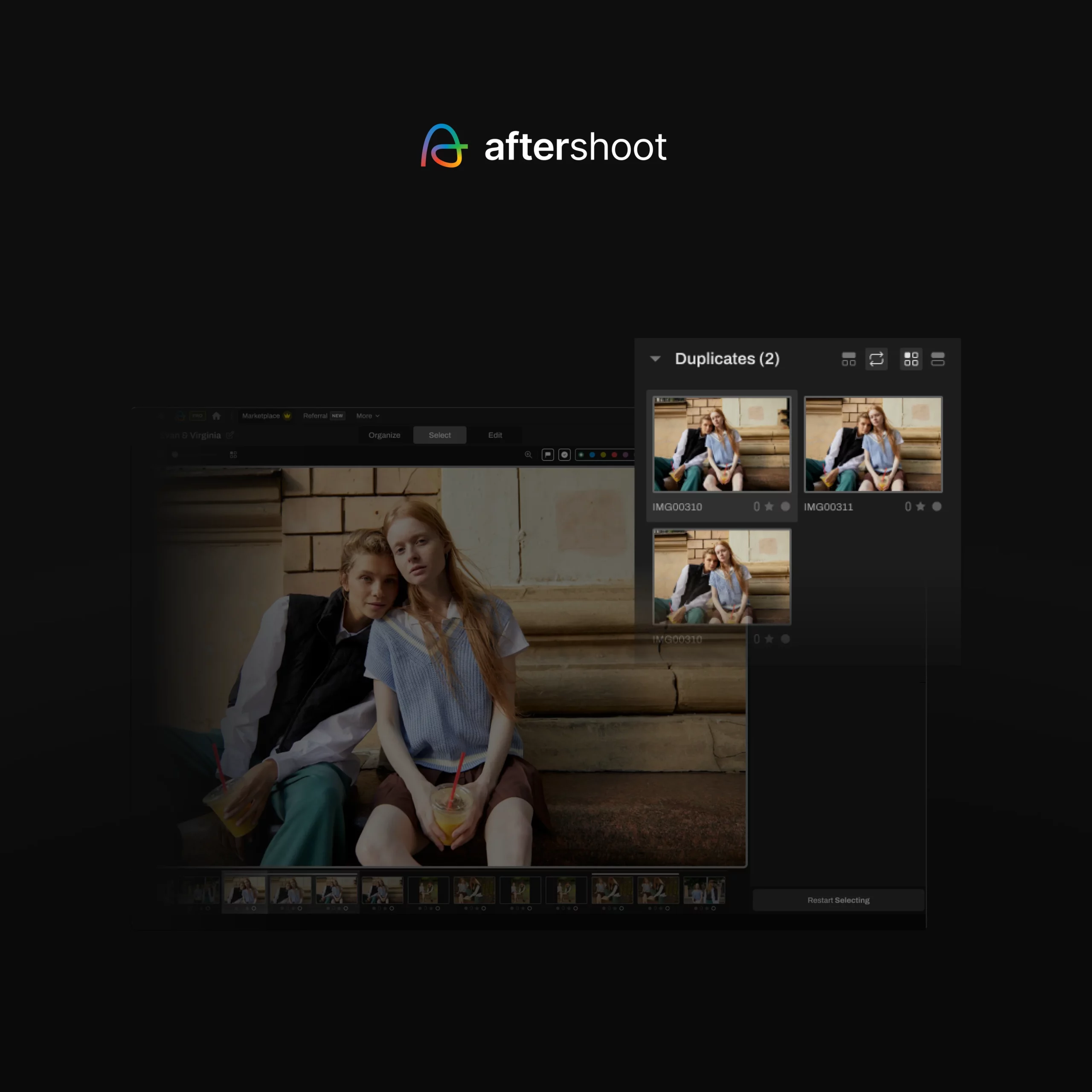
- Smarter Duplicate Grouping: Aftershoot’s culling AI has been improved to better tell the difference between true duplicates (bursts, minor expression changes) and intentional compositional variations (like a wide shot versus a tighter crop of the same moment). True duplicates get grouped together with the single best frame selected, while intentional variations are recognized as distinct creative choices and preserved separately.
- Leaner, Tighter Output: This smarter grouping translates directly into results – culling output is roughly 20% tighter, meaning less redundant photos and less manual cleanup after the AI runs.
- Clearer AI Mode Distinction: A new visual indicator and expanded explanation now make it obvious whether you’re using AI-automated or AI-assisted culling, so you always know which mode you’re in and what to expect from it.
- Simplified Customization Menu: The Customize AI Cull menu has been redesigned to cut down on clutter, replacing a slider-heavy interface with a cleaner layout that highlights just the sliders that matter most.
- Flat-Fee Pricing: Unlike cloud-based tools that charge per image, Aftershoot operates on a flat yearly or monthly subscription for unlimited culling keeping your costs predictable.
- All-in-One Workflow: Beyond culling, Aftershoot also handles AI editing, retouching, and direct gallery delivery, so you can stay in one ecosystem from ingestion to client handover.
- Offline Processing: It runs locally on your machine, so you’re not uploading massive RAW files to the cloud or relying on a stable connection to get your culling done.
For high-volume wedding and event photographers, the combination of a tighter, more context-aware cull and a simplified interface means less time second-guessing the AI’s groupings and more time trusting its picks.
2. Imagen
Imagen takes a cloud-first approach to both culling and editing. Like Aftershoot, it’s designed to be an end-to-end workflow tool, but it operates differently under the hood. Imagen offers features like “Cull to Exact Number,” which is useful for high-volume jobs where a client expects exactly 50 or 100 selects.
The main tradeoff with Imagen is its pricing model. Unlike Aftershoot’s flat fee, Imagen generally operates on a pay-per-image basis. This can be great if you only shoot a few times a month, but for high-volume photographers, those per-image costs can add up quickly over a busy season. It also requires uploading your RAW files or smart previews to the cloud, which demands a solid internet connection.
3. Photo Mechanic
If you don’t trust AI at all and just want to cull as fast as humanly possible, Photo Mechanic is still the industry standard. It doesn’t analyze faces, flag closed eyes, or group duplicates. What it does do is render RAW files instantly without the lag you get in Lightroom.
Photo Mechanic is purely for photographers who want absolute control over every single frame and have the muscle memory to cull thousands of images manually using keyboard shortcuts. It’s a completely different philosophy from Narrative or Aftershoot, but for photojournalists and sports shooters who need speed above all else, it remains undefeated.
4. FilterPixel
FilterPixel sits somewhere between Narrative Select’s manual assistance and Aftershoot’s full automation. It uses AI to group duplicates and evaluate focus, presenting you with a very straightforward “Accepted” or “Rejected” categorization.
It’s a capable, functional tool for photographers who want a clear, binary workflow and don’t need the deeper editing and gallery features that come with platforms like Aftershoot or Imagen. FilterPixel does offer a free tier (usually limited to a set number of projects rather than time-based), making it easy to test out before committing.
So, Which One Should You Actually Pick?
- Want to completely automate your culling for a flat rate? Go with Aftershoot.
- Prefer a cloud-based system and don’t mind paying per image? Imagen is a good choice.
- Want lightning-fast RAW rendering but zero AI involvement? Photo Mechanic is still king.
- Looking for a simple, binary Accepted/Rejected AI tool? Try FilterPixel.
Frequently Asked Questions
What is the best alternative to Narrative Select?
Aftershoot is the best all-around alternative because it moves beyond Narrative’s manual “AI assistance” and actually automates the culling process, grouping duplicates and picking the best images for a flat yearly fee.
Does Narrative Select have a free version?
Narrative Select offers a free trial that gives you access to its full features, but it is typically limited to a small number of projects (like 6) before you are required to upgrade to a paid subscription.
Is there a completely free photo culling software?
No dedicated, professional-grade AI culling tool is completely free forever without limits. Platforms like Aftershoot, Narrative, and FilterPixel offer full-featured free trials or limited free tiers, but professional volume requires a paid plan.
How is Aftershoot different from Narrative Select?
Narrative Select is a hybrid tool where you manually cull while the AI highlights blurry images and closed eyes. Aftershoot is fully automated – its AI actively analyzes the shoot, groups duplicates, and selects the best photos for you, saving significantly more time.
Do I need the internet to use AI culling software?
It depends on the tool. Aftershoot runs locally on your machine, meaning you can cull completely offline. Cloud-based tools like Imagen require an internet connection to upload your files or smart previews for processing.