TL;DR:
- Hybrid photo and video packages are growing, making a dedicated video delivery platform essential for modern studios.
- Traditional cloud storage creates a disconnected, unbranded client experience and often ruins video playback quality.
- The best platforms offer seamless streaming across devices, uncompressed downloads, and custom branding.
- Delivering photos and videos in a single gallery prevents client confusion and elevates your brand.
- Aftershoot Galleries allows you to host, deliver, and showcase videos right alongside your high-resolution images.
You just wrapped up a massive hybrid wedding. You spent days perfecting the color grade on the photos and dialing in the audio for the highlight reel. When it’s time to deliver, the photos look stunning in a carefully branded gallery.
But the video? It gets awkwardly shoved into a clunky Google Drive folder or a separate, unbranded Vimeo link.
Your client has to dig through their email to find it, the footage buffers on their phone, and that premium experience you worked so hard to build instantly breaks down. As more photographers and studios offer hybrid packages, finding the right video delivery platform becomes critical to maintaining a cohesive client experience.
This guide breaks down why traditional file-sharing apps fall short, what to look for in a platform built for creatives, and how keeping photos and videos in one place transforms your workflow.
The problem with generic video file sharing
When you first start offering video, it’s tempting to use the tools you already have. Dropbox, Google Drive, and WeTransfer are great for sending raw files to a video editor. They aren’t great for delivering final films to a bride or a brand client.
Generic file-sharing platforms force clients to download massive files just to watch their video. If they try to stream it, the platform heavily compresses the playback, making your 4K footage look like it was shot on a flip phone (not being dramatic, you know it).
Plus, sending a beautiful photo gallery alongside a separate, sterile link for a video creates a disjointed experience. Your clients paid for a premium service, and the delivery should reflect that.
Quick Comparison of the Best Video Delivery Platforms
| Platform | Best for | Photo + video in one client experience | Starting price |
| Aftershoot Galleries | Hybrid photographers who want unified delivery | Yes | Free plan available; paid plans from $15/month billed annually |
| Pic-Time | Print sales and marketing-led galleries | Yes | From $7/month billed annually; video storage may add cost |
| VidFlow | Dedicated, white-labeled video delivery | Primarily video-focused | One-time payments based on uploads, starting from $60 (50 GB) |
| Pixieset | Photo-first studios expanding into video | Yes, on eligible paid plans | Free plan available; Paid plans required for expanded storage and video needs, starting from $8 per month billed annually (10 GB photo and 30 minutes video) |
| Vimeo | Public portfolios and standalone video hosting | No | Starts at $12 per month (billed annually) for 1 user and 2 TB of storage. Plans vary by use case |
Best Video Delivery Platforms for Photographers
Here is a breakdown of the best video delivery platforms for professional photographers:
1. Aftershoot Galleries: Best overall for hybrid photographers
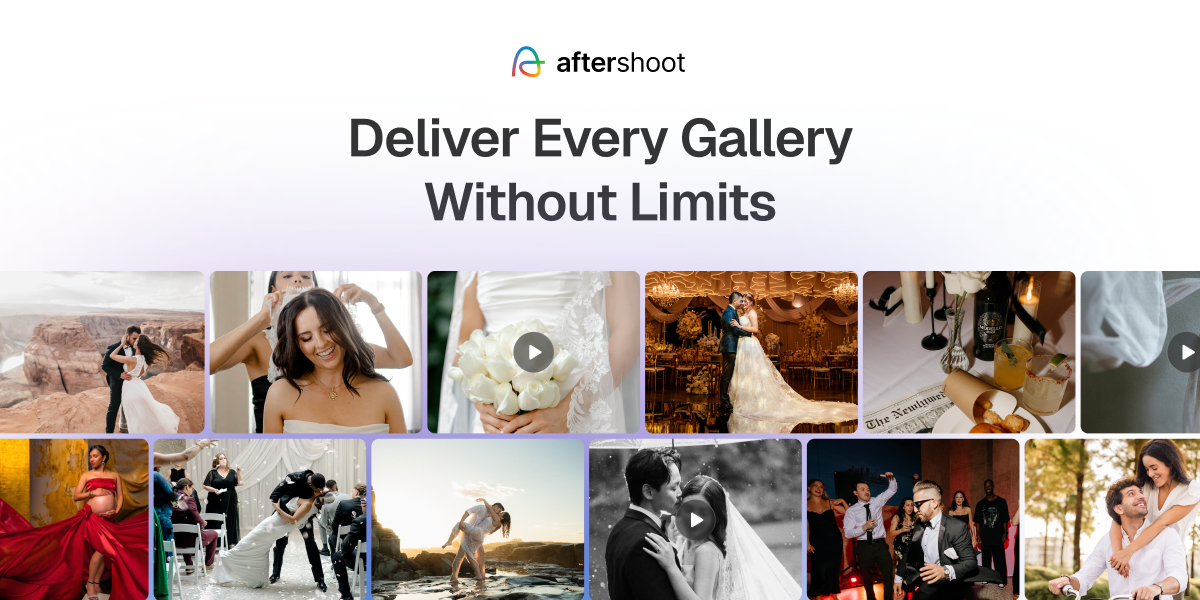
Aftershoot Galleries is built for photographers who don’t want their video delivery workflow to feel separate from their photo delivery workflow. You can place high-resolution images and video files in the same branded gallery, then send clients one link instead of explaining where each deliverable lives.
That makes it especially useful for wedding photographers, elopement teams, and branding photographers delivering a mix of stills, highlight films, reels, and behind-the-scenes video. Instead of asking a couple to remember one gallery link and one video link, you give them one place to revisit the full story of their day.
Best For
- Hybrid photographers and teams delivering photos plus video.
- Wedding photographers who want one polished final reveal.
- Studios that want clients to stream videos and access photos from the same gallery.
- Photographers who want to simplify delivery without adding another standalone tool.
Not For
- Videographers who only deliver films and need a specialized review-and-approval workflow for production teams.
- Studios that need deep print-store and gallery-sales automation as their main priority.
- Creators whose main goal is broad public video distribution rather than private client delivery.
Pricing
Aftershoot Galleries has a free Starter plan with 10 GB of photo storage and 1 GB of video storage. Its Premium plan starts at $15 per month (billed annually) and includes 500 GB of photo storage and 20 GB of video storage. Aftershoot Galleries also offers an Unlimited plan at $20 per month (billed annually) that includes unlimited photos and up to 6 hours of video storage.
Why it stands out: It removes the split between photo and video delivery. Your client gets one branded home for the images and films they paid for, while you get fewer links, fewer follow-up emails, and a more consistent final touchpoint.
2. Pic-Time: Best for print sales and gallery marketing
Pic-Time is a client-gallery platform for photographers that combines delivery, print sales, marketing automations, and video support. It is a sensible option for photographers who see gallery delivery as an extension of their sales and marketing process.
For hybrid work, Pic-Time can deliver photos and videos within professional galleries. However, video capacity and cost should be reviewed carefully because video storage is a separate consideration from the core gallery plan.
Best For
- Photographers who earn meaningful revenue from print sales.
- Studios that use gallery automations to encourage orders after delivery.
- Photo businesses that need a mature gallery and sales platform with video capability.
Not For
- Photographers who want straightforward, bundled photo-and-video delivery without monitoring separate video-storage needs.
- Video-heavy studios delivering large volumes of long-form films.
- Creators who need a video-first experience above all else.
Pricing
Pic-Time offers a free tier and paid plans beginning at $7 per month billed annually for its Beginner plan. Professional starts at $21 per month (billed annually), and Advanced starts at $42 per month (billed annually). Video storage starts at $10 per month (billed annually) for 100 GB and scales with capacity.
3. VidFlow: Best for dedicated video delivery
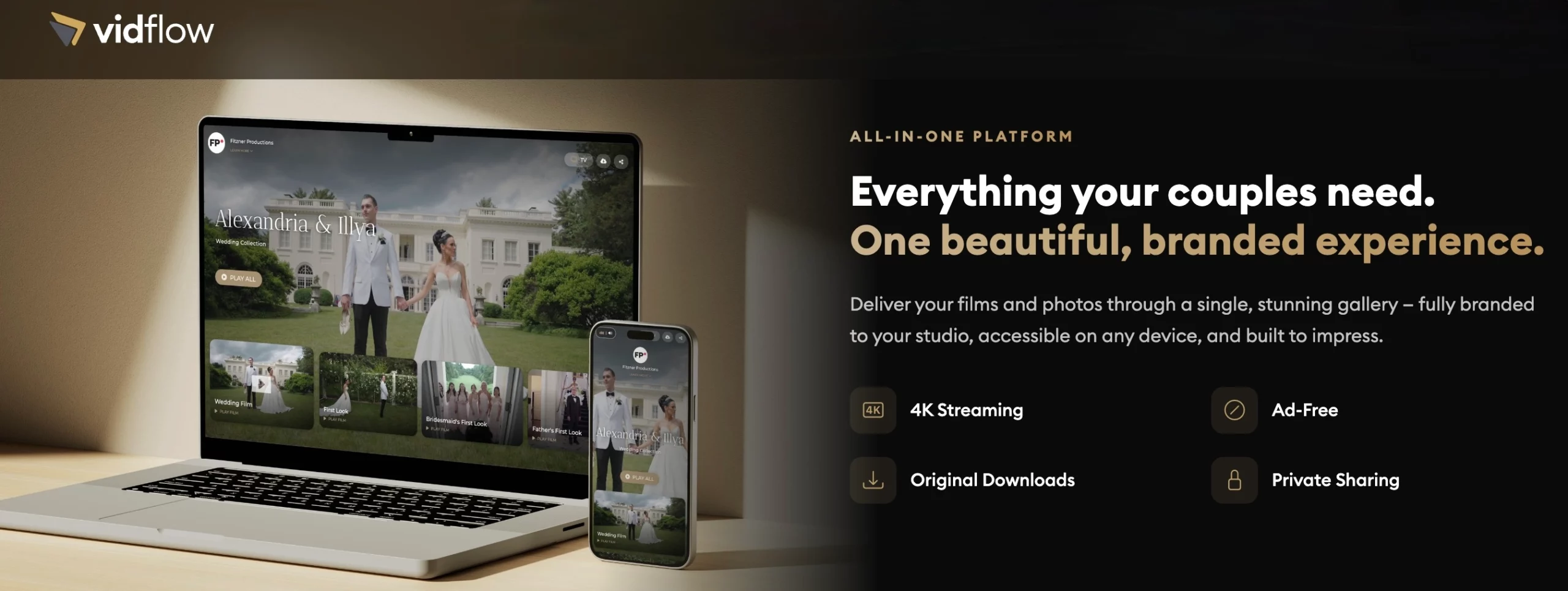
VidFlow is designed around delivering branded video websites to clients. It supports white labeling and long-term hosting, making it a strong option for videographers who want their films to take center stage.
For a filmmaker delivering wedding films, commercial work, or recurring client projects, the dedicated approach can make sense. The tradeoff is that you may still need a separate photo-gallery platform if you deliver both media types regularly.
Best For
- Wedding videographers and filmmakers delivering video-first packages.
- Studios that need branded video sites for each client.
- Creators who want dedicated video hosting and long-term access.
Not For
- Hybrid photographers who want photos and video inside one gallery.
- Studios trying to reduce the number of subscriptions in their workflow.
- Photographers who mainly need a photo delivery platform with occasional video support.
Pricing
VidFlow offers pay-per-use upload packs as well as annual memberships. Its pay-per-use upload packs range from $60 (50 GB) to $475 (500 GB). Its annual Plus plan starts at $19 per month billed annually, while Pro starts at $79 per month billed annually and Ultimate starts at $165 per month billed annually.
4. Pixieset: Best for photo-first gallery workflows

Pixieset is a familiar choice for photographers who already use client galleries for proofing, downloads, and print sales. For photo-first studios adding occasional video, it can be practical to keep delivery inside an existing ecosystem rather than adopt a separate tool.
The key question is scale. If video has become a core part of your packages, compare the available storage, streaming experience, and plan requirements against a platform designed around delivering both formats from the start.
Best For
- Photographers already using Pixieset for photo galleries.
- Studios that add short-form video or occasional films to photo packages.
- Businesses that want a well-known photo-gallery workflow with room for video.
Not For
- Video-heavy hybrid studios that need extensive video storage.
- Videographers looking for a dedicated film-delivery platform.
- Teams that want video delivery to be the central product experience.
Pricing
Pixieset offers a free photo-gallery option, while video delivery and increased storage depend on the selected paid plan and storage requirements. The recommended Pro plan is $24 per month (billed annually) for 1000 GB photos and up to 2 hours of video. Compare current plan limits before promising video delivery as part of every client package.
5. Vimeo: Best for public portfolios, not client galleries

Vimeo is a video-hosting platform that works well when your primary goal is publishing a portfolio, embedding films on your site, or sharing work publicly. It gives filmmakers a polished place to showcase reels and selected client work.
But Vimeo is not built to replace a unified client gallery. If you deliver photos and video together, clients still need to move between your photo gallery and a separate Vimeo link. That can be fine for a portfolio, but it creates more friction for a paid client delivery.
Best For
- Videographers building a public-facing portfolio.
- Creators embedding films on their website.
- Teams sharing standalone videos without photo deliverables.
Not For
- Hybrid photographers delivering a complete gallery and film package.
- Studios that want one private client link.
- Photographers looking to combine proofing, downloads, and film delivery.
Pricing
Vimeo pricing varies by plan and intended use. The Starter plan is $12 per month (billed annually) for 1 user and 2 TB of storage. The recommended Standard plan is $25 per month (billed annually) for 5 users and 4 TB of storage. Review current plans based on required storage, privacy controls, team seats, and download permissions before using it as a client-delivery tool.
What makes a great video delivery platform for photographers?
Here is what photographers should look for:
- Flawless streaming playback.
Clients want to watch their highlight reel on their phones, tablets, and smart TVs immediately. So, the platform should stream smoothly without destroying your color grading. - High-resolution downloads.
While streaming is for sharing, clients still need access to the original, uncompressed files for safekeeping and offline viewing. - Integrated branding.
The platform should look like an extension of your website, not a third-party tech tool. Your logo, colors, and typography should take center stage. - Unified photo and video delivery.
The best video delivery platform isn’t just a place to host video. It brings photos and films together in one seamless gallery, so your clients can experience the complete story of their day without jumping between different links or platforms.
Comparing the options: Where should your videos live?
When it comes to delivering hybrid packages, you generally have three options.
| Platform Type | The Client Experience | The Workflow Impact |
| Generic Cloud (Drive, Dropbox) | Clunky and unbranded. Forces downloads to view the video properly. | Requires managing separate folders and links for photos and videos. |
| Video-Only Hosting (Vimeo, Wistia) | Good streaming, but separates the video entirely from the photo gallery. | Means paying for, and managing another separate software subscription. |
| Unified Galleries (Aftershoot) | Seamless. Photos and videos live beautifully in one branded space. | Everything is managed in one place. One link, one delivery. |
Delivering it all with Aftershoot Galleries
We know that managing multiple subscriptions for photo delivery, video delivery, and culling is exhausting and expensive.
And that’s exactly why we built Aftershoot Galleries. It brings your entire delivery process under one roof. When you shoot a hybrid wedding or a branding session with video, you don’t have to split the delivery.
You upload your high-resolution photos, drop your video files into the same gallery, and send your client one beautifully branded link. They can stream their film in high quality, download the original file, and view their photos in the exact same elegant interface.
It removes the friction from your workflow and elevates the final reveal for your clients.
Stop splitting your deliverables
The way you deliver your work is the final impression you leave with a client. Sending separate links and explaining how to download large files isn’t the premium experience they expect.
By bringing your videos and photos into one unified video delivery platform, you eliminate confusion, save money on extra subscriptions, and give your clients a stunning, cohesive gallery they’ll want to share with everyone.
FAQs for Best Video Delivery Platforms
Q1. Why shouldn’t I use Vimeo or YouTube to deliver client videos?
While platforms like Vimeo are great for public portfolios, they separate your videos from your photo galleries. This forces clients to keep track of multiple links. A unified video delivery platform keeps the entire project in one branded space.
Q2. Can clients download videos directly from Aftershoot Galleries?
Yes. Clients can stream the video smoothly across devices to show friends and family, and they can also download the full-resolution file directly from the gallery for their own safekeeping.
Q3. How does a unified video delivery platform help my photography business?
It saves you time by consolidating your workflow into one app. It also creates a higher-end, cohesive client experience, which leads to better reviews, more referrals, and a stronger brand perception.
Q4. Will a video delivery platform compress my 4K video quality?
Unlike generic cloud storage that heavily compresses files for streaming, a professional video delivery platform is built to handle high-resolution footage. Platforms like Aftershoot Galleries optimize the streaming experience for mobile and desktop without destroying your color grading, while still letting clients download the original, uncompressed file.
Q5. Is it secure to share client films on a video delivery platform?
Yes. When you use a dedicated video delivery platform instead of public sites like YouTube, you maintain complete control over privacy. You can protect your galleries with passwords, restrict download permissions to specific clients, and keep intimate wedding or branding films completely private.