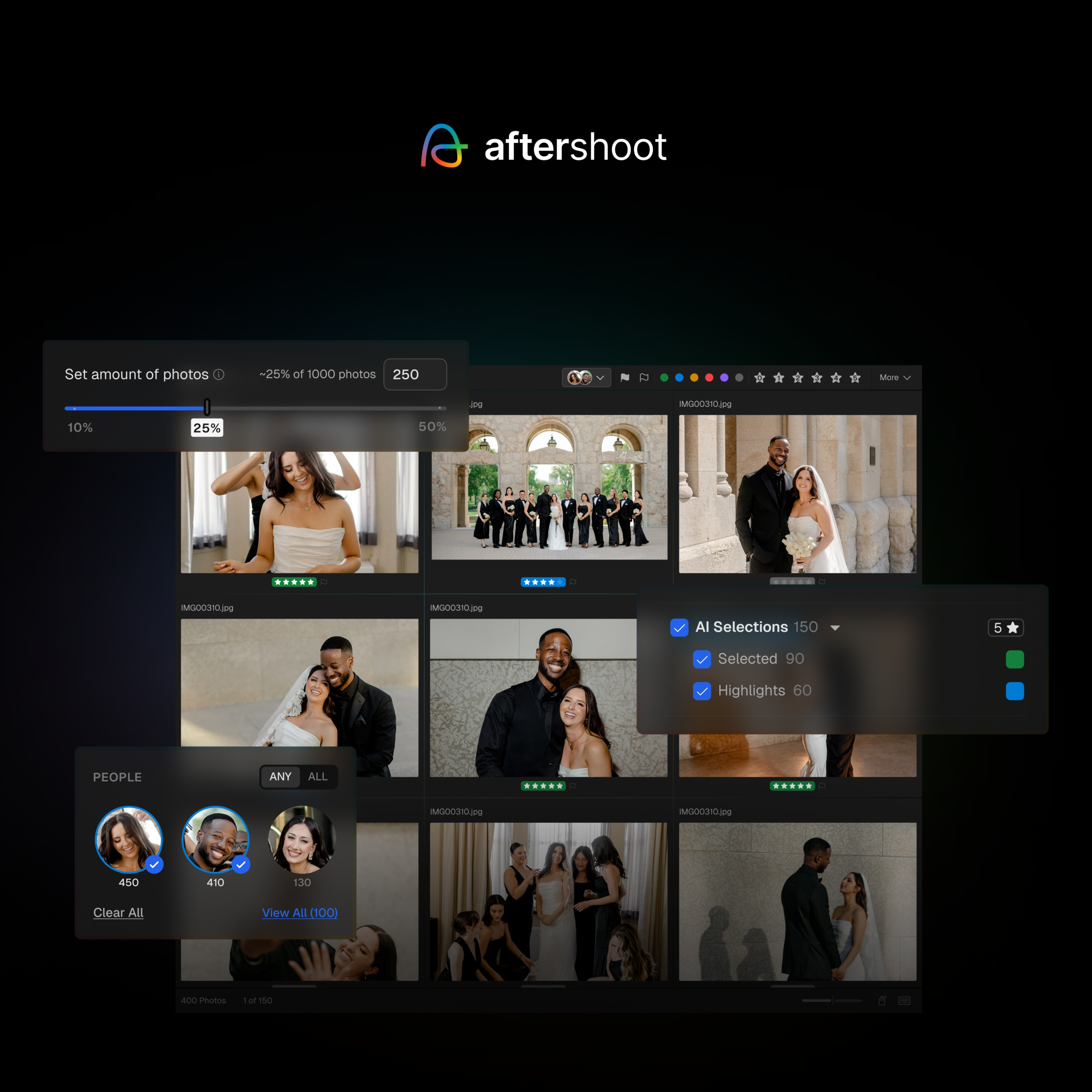
Aftershoot exists because of photography. One of our co-founders is a working photographer. The other co-founder is from a family of photographers who watched the post struggles a lot more than the shoots. So photography was never just an abstract “market” with “opportunities” for us. It always meant more.
And for a long time, the idea that AI could “replace photographers” didn’t feel like a serious premise, because anyone who has photographed people knows what the job actually is.
It’s trust, timing, reading a room, making someone feel comfortable when they’re overwhelmed, frozen or in a special moment they’ll cherish forever. It’s getting the one honest expression in a day full of performance.
That mix of presence, social intelligence, timing, and restraint is not a feature you can ship. Software can’t do that. It’s a craft photographers spend years earning.
Still, “so… is this going to replace me?” is a common anxiety photographers are discussing everywhere. What they’re really asking is,
“will the industry start treating photography like a commodity?”
The fear is really that customers stop seeing the value in what they do, that they stop believing the photographer’s images, and that they stop valuing photography altogether.
And because photographers have watched other creative industries get reshaped by systems that were built quickly, explained vaguely, and trained on work without meaningful consent, these fears are not imaginary.
You’re asking whether the rules are going to change after you’ve already handed over your work, your style, your files, your trust.
When asked what ethical AI meant to them, Maddy Jenkins, an Wedding and Portrait Photographer from Tampa Bay said:
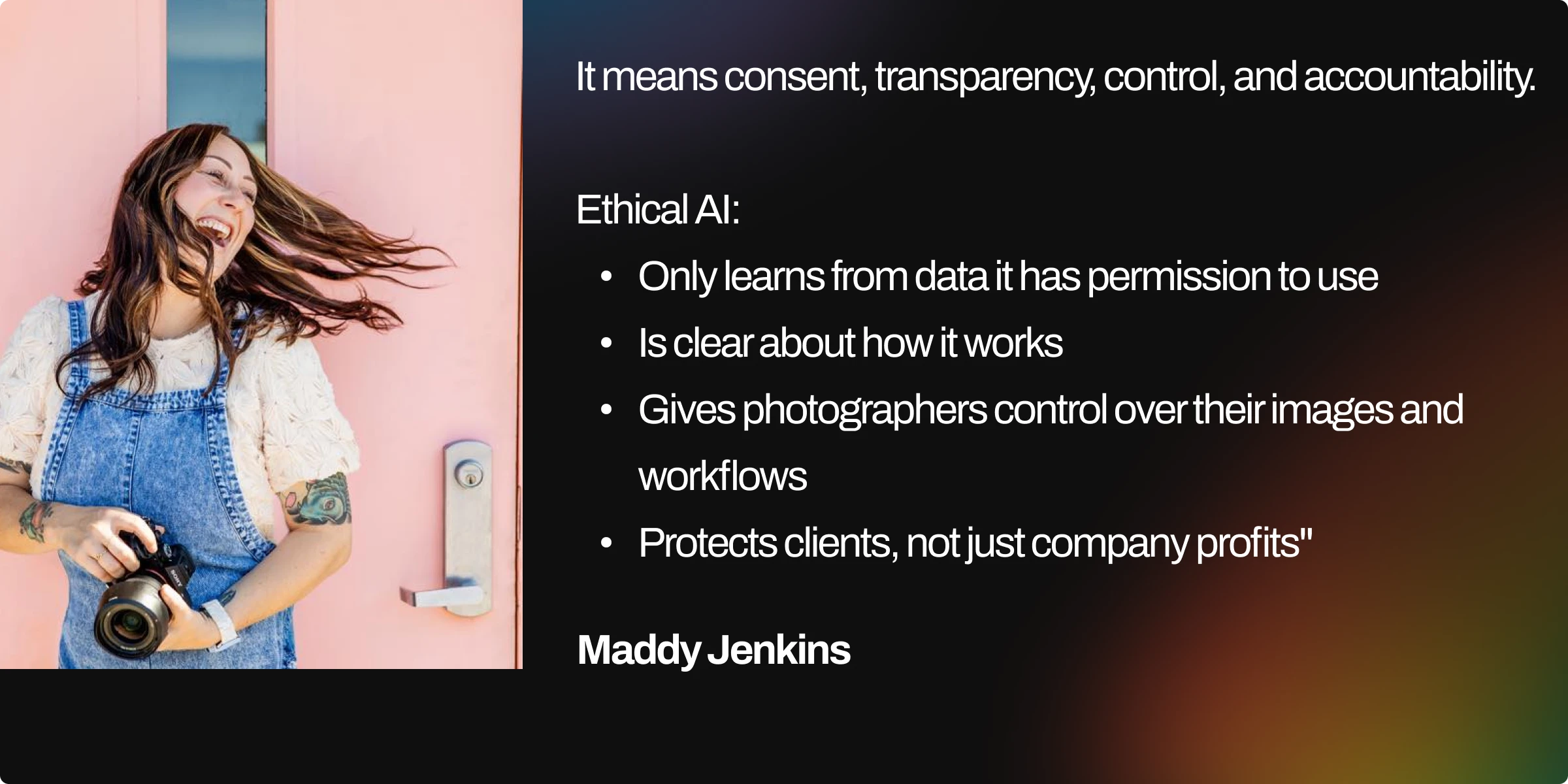
You need companies to answer these basic questions to assess if a tool wants to assist you or replace you.
We’ll go first.
What Aftershoot builds, and how
Photography has two parts. There’s the creative part: the decisions that make your work yours—what matters, what stays, what the final images should feel like.
Then there’s the repetitive part: the volume work after the shoot, when you’re sorting near-duplicates, fixing a million inconsistencies, and getting the set ready to deliver.
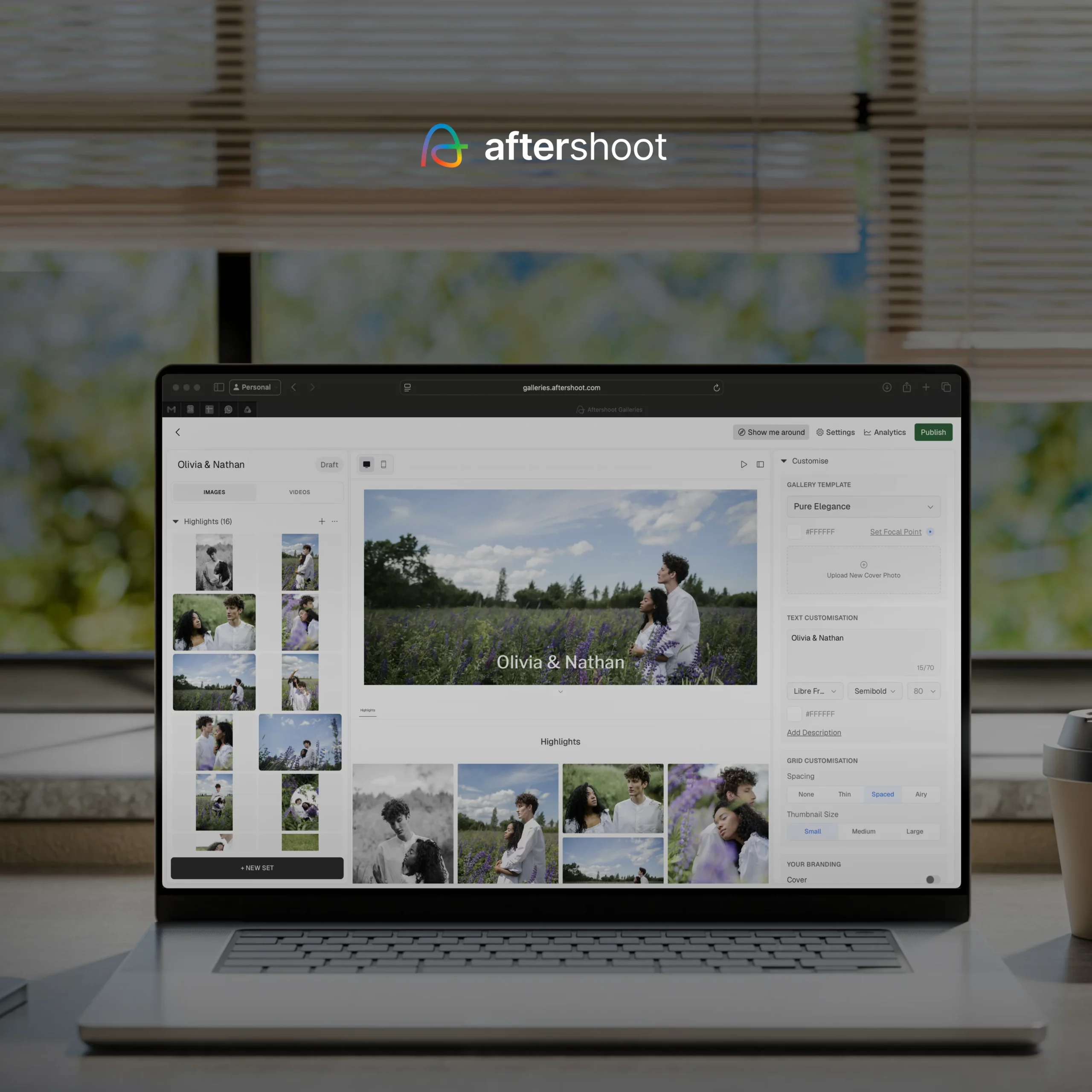
Aftershoot lives in that second part. It is designed to compress the repetitive steps so photographers can spend more time shooting, resting, marketing, meeting clients and doing the work that actually grows a business. The photographer remains the decision-maker.
1. What Aftershoot does.
Photographers already automate parts of their workflow. Presets, batch processing, outsourcing, hiring editors or agencies when volume demands, are all ways working photographers protect their time.
Aftershoot does just that, but does it better.
It works locally on your laptop, does the work photographers have long been delegating anyway, PLUS, it gives more control back to photographers.
Competent technical first passes for culling, batch editing and retouching, all are ways to reduce the time and mental bandwidth you spend making thousands of micro decisions that a second shooter could have made too.
Aftershoot handles that boring stuff, and gives you time back to make the creative calls. That will be true for everything we build in the future too.
Read also: Aftershoot’s clear stance on “Will AI replace photographers”
2. What Aftershoot does not and will not do.
Aftershoot doesn’t shoot. It doesn’t replace the work that clients actually hire a photographer for. It doesn’t walk into a room and earn trust. It also does not create images using AI because we’re a post-processing software for photographers.
Not instead of photographers. Not against.
3. What happens with your work at Aftershoot?
We’ll address the most important and frequently asked questions first:
- Can you control whether your photos are used for learning?
Yes. You can turn off user learning at import. - Can you delete your data?
Yes. Request it through support. Typical processing time is around 7–14 days. - Do your photos need to be uploaded to the cloud to be processed?
No. Core inference for culling, editing, and retouching runs locally. Some services still use the cloud (login, subscriptions, creating custom profiles), but the core workflow doesn’t require uploading your photography work elsewhere for processing. - Do you sell or share photography data?
No. We don’t sell photographer data and we don’t share photography data with third parties.
We’ve answered more questions about data use and transparency in greater detail here.
If you’re evaluating any company in this space, demand clear answers to the same questions.
If the answers are vague, assume the rest will be too. The tools you bring into your workflow become part of the promise you’ve already made to your clients.
Assist the workflow. Respect the work.
That’s the principle.
For everyone who joins Aftershoot, and everyone who’s been building it for years, these are the principles.
- We build to make photographers’ lives easier, not to take their place.
- We don’t use their work without permission.
- We don’t hide the tradeoffs.
- And if something we ship weakens trust, we fix it with honesty.
Treat this as something you can hold us to. If we miss the mark, we’ll listen and adjust.
See you after the shoot!