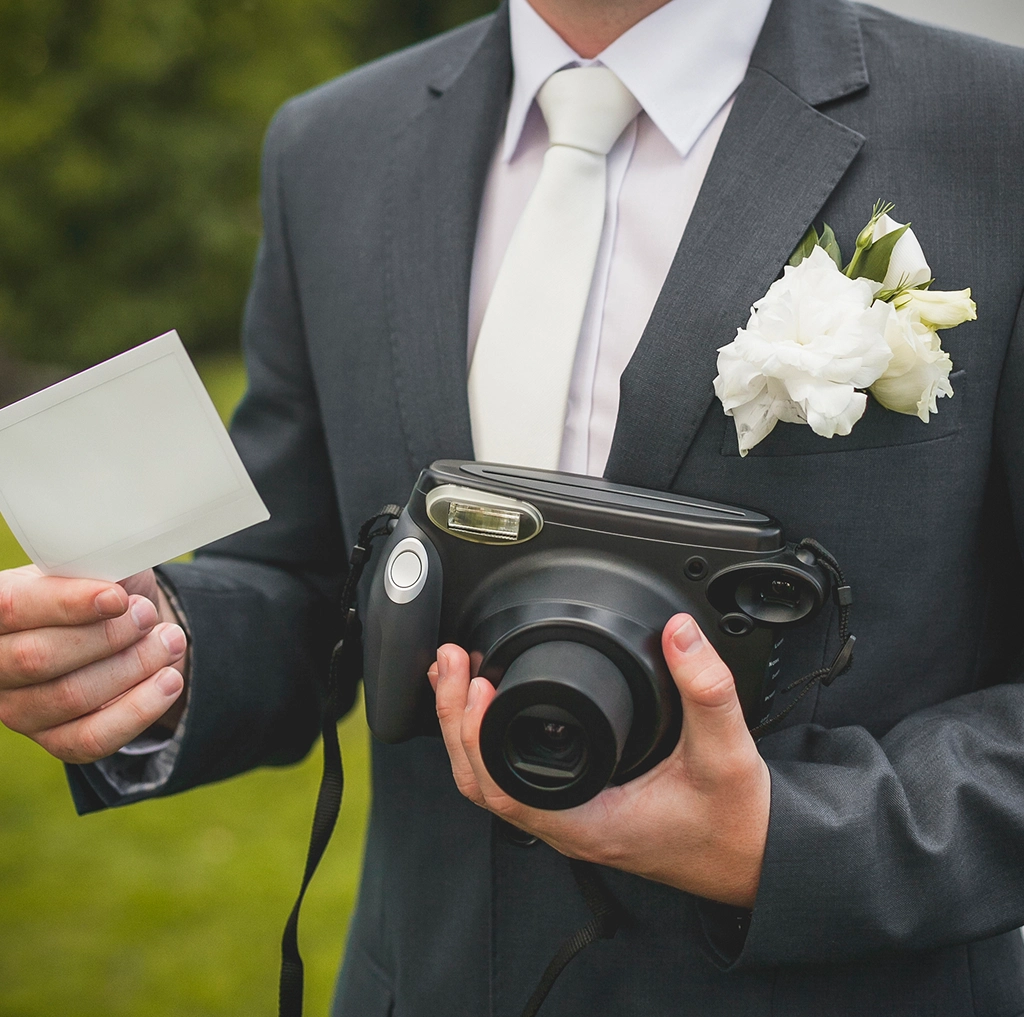

Someone in our Facebook community asked what cameras Aftershoot users are using most. So we looked.
If you ask the internet, photographers are rushing to buy and experiment with the latest trending gear. However, what professional photographers rely on most for paid shoots is a whole other story.
Camera sales reports talk about the first. This article is about the second.
Sales and shipment reports answer what people bought in a given year. They are shaped by pricing, bundles, availability, and whatever the algorithm decided was cool this week.
- CIPA shipment data for 2025 shows the camera market growing again, with mirrorless shipments rising while DSLR shipments keep falling.
- CIPA data also shows fixed-lens cameras jumping sharply in 2025, with a big rise in unit shipments and an even bigger rise in value. DPReview breaks down the same CIPA release and why compacts were the headline.
A camera can be popular, fun, even viral, and still not be what photographers rely on as their primary gear for paid work.
What this report measured
This study uses a large workflow-based dataset where each photographer is represented by their most-used camera body in 2025.
- The one main camera body photographers use most in their workflows
- The number of projects each photographer completed, so we can identify power users and see what bodies the busiest shooters rely on
This report answers:
“What camera body became the main work tool for photographers inside a delivery pipeline.”
TLDR
⭐ Canon, Sony, and Nikon made up 92% of main cameras
⭐ Mirrorless made up 81% of main cameras among photographers with a known camera type
⭐ Ten camera bodies covered about 59% of identifiable main cameras
The big three brands that run pro workflows
| Brand | % of users who use it | |
| #1 | Canon | 44% of users |
| #2 | Sony | 26% of users |
| #3 | Nikon | 21% of users |
Together, these brands make up 92% of main cameras professional photographers relied on! You can see the ecosystem effect directly in the results.
Of the top 20 most used camera models, Canon holds 11 of the 20 slots, followed by Sony with 3 top bodies, and they are exactly the ones you would expect to carry volume. Nikon’s share is anchored by Z bodies, with Z6 II and Z8 placing in the top 10.
A working kit is lenses, flashes, batteries, chargers, media, backups, and muscle memory. It is also whether a second shooter can pick up your spare body and keep going. It is whether rentals are easy. Once that system is built, photographers tend to upgrade slowly and stay inside it.
The brand share after the 3 major players in our dataset drops steep, and ranks
- Fujifilm – 2%
- Panasonic – 1%
- Leica – under 1%
Clearly, most photographers in high-throughput workflows are not picking a rare system as their primary work tool, but staying inside ecosystems they can rely on to run their business.
Read also: Nikon vs. Canon: Which One is Right For You?
Mirrorless vs DSLR debate is settled for volume shooters
Mirrorless made up about 81.67% of main cameras among photographers with a known camera type.
DSLR made up about 16.62%
The remaining slice is other camera types.
Mirrorless leading is expected and it matches the broader shipment direction in 2025.
DSLR is still meaningful as a main camera choice in working workflows, but it skews less toward the highest volume segment. When you look at power users (users who completed the highest number or projects), mirrorless grows even more dominant.
Among power users, mirrorless rises to about 86.99 percent and DSLR drops to about 12.76 percent.
So yes, DSLRs are still present in paid work.
The data also shows that heavy volume shooters are more likely to be mirrorless-first.
Top camera bodies pro photographers reach for on paid shoots
Here are the top 10 most-used main camera bodies:
- Canon EOS R6 Mark II
- Sony a7 IV ILCE-7M4
- Canon EOS R6
- Sony a7 III ILCE-7M3
- Canon EOS R5
- Nikon Z6 II
- Canon EOS 5D Mark IV
- Nikon Z8
- Sony a7R V ILCE-7RM5
- Nikon D750
Those ten bodies alone cover about 59% of identifiable main cameras. That is a lot of concentration!
The common thread among all these bodies is that they’re practical workhorses. These bodies tend to deliver dependable autofocus in mixed conditions. They tend to hold up in low light. Their files are predictable in batch work. Their lens ecosystems are deep enough that people do not need to get clever to cover common jobs.
Also worth mentioning is that the Canon EOS 5D Mark IV is still in the top tier. A DSLR workhorse is still doing paid work as a main camera.
Now the next 10. These show more inclusive budgets and more transition choices.
- Canon EOS RP
- Nikon Z6 III
- Canon EOS R
- Canon EOS R8
- Canon EOS 5D Mark III
- Nikon Z5
- Canon EOS 6D Mark II
- Nikon Z7 II
- Nikon D850
- Canon EOS 6D
Three observations worth calling out from this tier:
- Value full frame is a strategy: Bodies like the EOS RP and Nikon Z5 show up because they deliver solid files and stable operation without flagship pricing.
- Transition bodies stay in circulation: The EOS R showing up is a reminder that photographers upgrade when gear becomes the bottleneck, not when a new model launches.
- DSLR remains present through a shortlist of proven bodies: D750, D850, 5D Mark III, 6D, 6D Mark II. These were long-running working standards and a meaningful number of photographers are still running them as their main camera.
What cameras high-volume photographers rely on in 2026
The most common main camera bodies among power users who shoot high volumes are:
- Canon EOS R6 Mark II
- Canon EOS R6
- Sony a7 IV ILCE-7M4
- Nikon Z6 II
- Canon EOS R5
- Sony a7 III ILCE-7M3
- Nikon Z8
- Sony a7R V ILCE-7RM5
- Canon EOS 5D Mark IV
- Nikon D750
High volume shooters tend to standardize on bodies that minimize rework.
Missed focus hurts more when you shoot every week. Workflow friction hurts more when you deliver constantly. That is why the power user list looks like the overall list, just more concentrated around the same dependable workhorses.
If you shoot high volumes, you need to bookmark this post
If you expected power users to have the wildest gear choices, the data says the opposite. The busiest photographers standardize. They stick with camera bodies that stay reliable on shoots and predictable in post.
Most of the main cameras here are not recent launches. Working photographers replace gear when it stops earning, and definitely not when a new model drops and the internet goes crazy.
That is the point of this report. It is not a list of what is trending, but a list of what professionals keep relying on for paid work.
If you shoot high volume, use this list as a filter. It shows which bodies consistently hold up when you’re working with tight delivery timelines.
If your gear is already locked in but the real bottleneck is the post-production that demands all your time and energy, Aftershoot might just be what you’re looking for.
With culling, editing, and retouching all packed neatly into one seamless workflow, and tight integrations with other photography software, Aftershoot’s AI-powered photography workflow software gets you 90% closer to a client-ready gallery in a fraction of the time.
Try it on some of your real shoots and see for yourself!