
AI, like any technology, has a carbon footprint and we recognize the responsibility that comes with it, especially as this space continues to grow so rapidly. AI has quickly become a foundational part of everyday workflows for photographers akin to many other professions and industries.
What felt like a distant concept just a few years ago is now something many of us rely on daily. As this incredibly fast adoption grows, important questions are being brought up:
- What impact does AI have on the environment?
- What is Aftershoot doing about it?
At Aftershoot, we are committed to transparency and sharing about how our AI works, with both performance and sustainability in mind.
We are incredibly proud of not only what we’ve done for the photography industry but also the awareness and responsibility we’ve shouldered in tandem with building a program that is moving the needle forward in a groundbreaking sector.
AI & The Environment
Much like other storied innovations, AI unfortunately has a carbon footprint. Training models, running and storing data, all require energy, and depending on how that energy is sourced, it can contribute to environmental impact and emissions. At the same time, not all AI systems are built the same way.
The environmental impact of AI depends heavily on how it’s designed, how often it relies on cloud infrastructure, and how efficiently it operates.
At Aftershoot, we’ve made conscious decisions about how our AI works, with both performance and sustainability in mind.
One of the biggest differentiators with Aftershoot is where the work happens.
Local-first AI
Unlike many AI tools that rely heavily on cloud processing, Aftershoot runs primarily on your computer and not the cloud like most of our competitors.
Now what does this mean?
1. Less data transfer
2. Less reliance on energy-intensive data centers
3. Faster performance for you
4. More control over your workflow
Only a small portion like AI profile training is processed in the cloud.
One of the most important differences is that Aftershoot runs primarily on your local machine. Instead of constantly sending data back and forth to the cloud for processing, most of the work, like culling and editing, happens directly on your computer.
This significantly reduces the need for continuous cloud usage AKA the most energy intensive aspects of AI. It also means faster performance and a more seamless experience for photographers while lowering overall energy demand.
As an added benefit, our program works OFFLINE! Which is something we’re incredibly proud of to offer.
So, in summary, only a small portion, like AI profile training, is processed in the cloud and everything else is done locally.
Now, we understand the importance of transparency and there are still certain aspects of AI that require cloud processing. When training your AI profiles and other things where we rely on the cloud, we use the Google Cloud Platform.
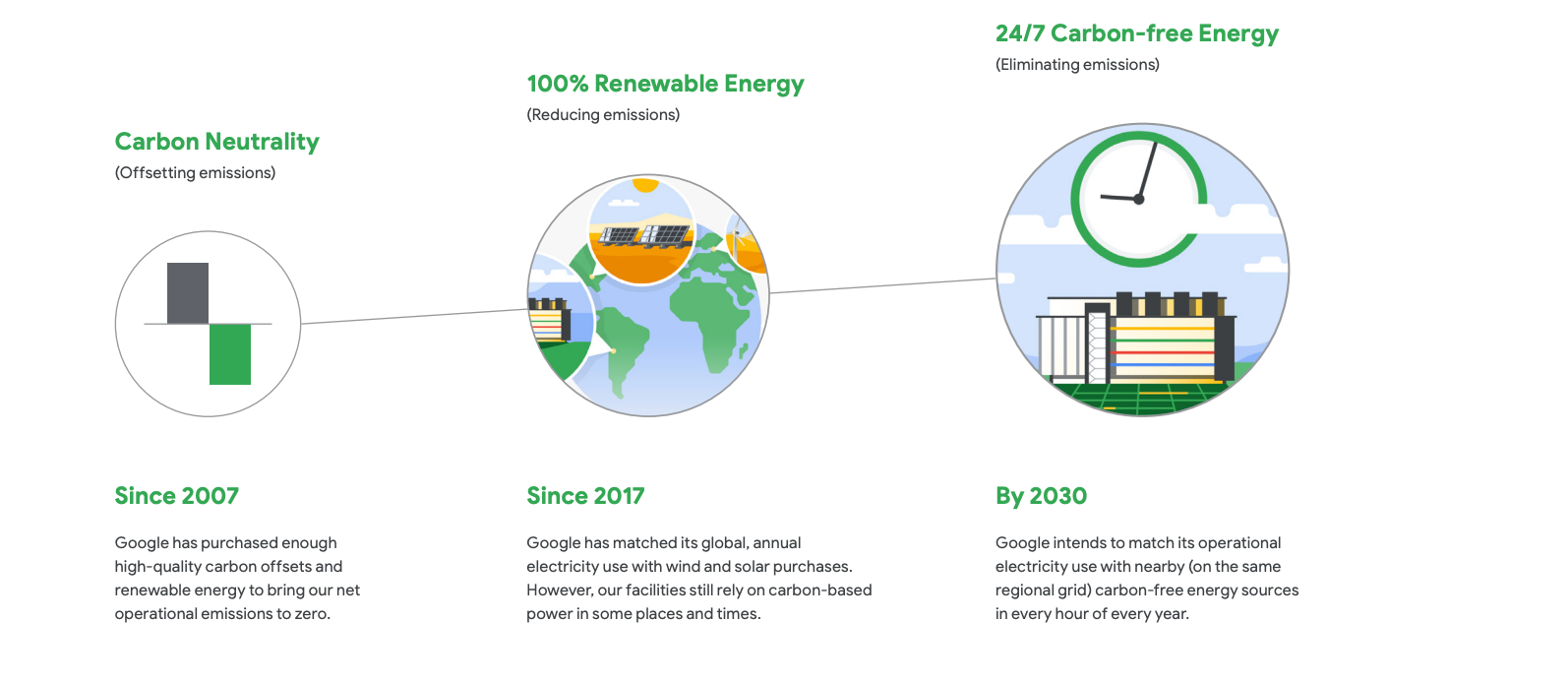
For context on why we use Google’s Cloud, they have been carbon neutral since 2007 and have committed to operating on entirely carbon-free energy by 2030. Now, while no cloud provider is without impact, choosing infrastructure that prioritizes renewable energy and efficiency is an important step in reducing overall environmental cost. As the technology progresses, we want to make sure that we are partnered with companies that are innovating while simultaneously ensuring sustainable progress.
Beyond infrastructure, efficiency plays a major role in sustainability. The more optimized an AI system is, the less computing power it requires. At Aftershoot, we continuously work to refine our models so they can deliver high-quality results without unnecessary processing. This reduces energy usage while also improving speed and reliability for photographers.
To see more information about Google and their AI usage and plans for the future, you can head over here. You can also download a PDF for more information on Google’s initiative to be carbon neutral by 2030.
Why efficiency matters
There’s also a less obvious factor worth considering: TIME. It may not be entirely obvious, but, our motto and goal at Aftershoot has been to help photographers cull and edit faster. So, what does this mean? While the energy savings of a single session may be small, the cumulative effect across thousands of users and workflows can become meaningful over time.
That being said, this is still an evolving space and we understand that.
Measuring the exact environmental impact of AI is complex, and the technology itself is advancing rapidly. We don’t claim to have all the answers, but we do believe in being transparent about the choices we’re making and the areas where we can continue to improve on.
At Aftershoot, sustainability is not a single feature or initiative. It never will be. To us, it’s a part of how we think about building technology – from prioritizing local processing to choosing more responsible cloud partners and optimizing for efficiency. We will always aim to reduce our carbon footprint while continuing to support photographers in meaningful ways.
We stand by transparency and encourage feedback from our users. We also understand that this is a conversation that is NOT going to go away and will develop in different ways as the AI space grows.
We welcome it and will not steer away from it. If you have questions, thoughts, or ideas, we encourage you to reach out.
Accountability and progress go hand in hand, and we’re committed to both.